

05 Aug GLP-1 Support Supplements: What Brands Should Know Before Launching a Formula
GLP-1 Support Supplements: What Brands Should Know Before Launching a Formula
GLP-1 has quickly become a hot topic in the health, nutrition, and dietary supplements industry. As more consumers learn about glucagon like peptide-1, appetite regulation, food intake, blood sugar, body weight, and metabolic health, many brands are asking the same question: what role can a GLP-1 support supplement play in the market?
The answer needs to be careful, practical, and responsible. GLP-1 supplements are not prescription medications. They are not prescription drugs, and they should not be positioned as a replacement for GLP-1 medications. They should not promise significant weight loss, medical weight loss, or the same results as clinical trials for prescription medications. However, the rise of GLP-1 is changing eating habits, lifestyle habits, food choices, supplement routines, and consumer expectations. This creates a new opportunity for brands to develop dietary supplements that support nutrition, gut health, digestive health, lean body mass, lean muscle mass, hydration, energy levels, and healthy habits during a changing weight management journey.
For supplement brands, the opportunity is not to make drug-like claims. The real opportunity is to understand what consumers may need when their appetite, diet, balanced meals, and daily food intake begin to change. Many consumers who are trying to lose weight or manage body weight become more aware of protein, fiber, essential nutrients, healthy fats, probiotics, fermented foods, regular exercise, strength training, resistance training, and clinical nutrition. A well-designed GLP-1 support formula can fit into this broader wellness routine if it focuses on nutritional support instead of treatment claims.
Why GLP-1 Is Changing the Supplement Market
GLP-1 is short for glucagon like peptide-1, a hormone involved in appetite regulation, digestion, insulin sensitivity, and blood sugar response. In simple terms, GLP-1 is part of the body’s communication system between the digestive system, the brain, and metabolic processes. It helps explain why food intake, appetite, gut signals, and blood sugar are closely connected.
GLP-1 medications have gained wide attention because they are used as prescription medications in medical weight management and metabolic health care. In clinical trials, some GLP-1 medications have been associated with significant weight loss. This has changed how many consumers think about weight loss goals, body weight, diet, and long-term lifestyle changes. But dietary supplements are different from prescription drugs. Brands must not suggest that a supplement can act like medication, produce the same results, or replace advice from a healthcare professional.
The supplement opportunity exists because consumers often build a broader routine around their weight loss journey. When appetite decreases or eating habits shift, some consumers begin to ask new questions. Am I getting enough protein? Am I losing lean muscle mass? Do I need more fiber? How do I support digestive health? How do I maintain energy levels? Should I add probiotics or fermented foods to improve gut health? Am I getting enough vitamins and essential nutrients from smaller meals?
These questions are exactly where dietary supplements can play a responsible role. The product should not be positioned as a treatment for obesity, diabetes, or any disease. Instead, a GLP-1 support supplement should be positioned as part of a nutrition support strategy that helps consumers maintain healthy habits, balanced meals, regular exercise, and better food choices.

The Difference Between GLP-1 Supplements and GLP-1 Medications
One of the most important messages for brands is that GLP-1 supplements and GLP-1 medications are not the same category. GLP-1 medications are prescription drugs used under medical supervision. They are studied in clinical trials for specific medical uses. Dietary supplements are products intended to supplement the diet. They may provide vitamins, minerals, protein, probiotics, fiber, healthy fats, or other supplements, but they should not be marketed as prescription medications.
This distinction matters for product naming, packaging, labeling, website copy, online marketplaces, social media ads, and customer education. If a product name says or implies that it can replace GLP-1 medications, the claim becomes risky. If a product claims to reduce hunger in the same way as prescription drugs, that is also risky. If a product suggests it can cause significant weight loss without diet, exercise, or lifestyle changes, the message may be misleading.
A safer approach is to use GLP-1 support as a lifestyle and nutrition context. The article, label, or product page can explain that GLP-1 is influencing consumer eating habits and that brands are creating nutrition support products focused on protein, fiber, digestive health, gut health, hydration, and essential nutrients. Claims such as “supports digestive health,” “supports daily protein intake,” “supports muscle maintenance with exercise,” “supports a healthy gut microbiome,” and “helps maintain essential nutrient intake” are more aligned with dietary supplement positioning.
Brands should also remember that consumers may be using other medications or other supplements. A healthcare professional should be involved when a consumer has a medical condition, takes prescription medications, experiences digestive discomfort, has blood sugar concerns, or plans major lifestyle changes. Responsible brands should make this clear.
Building a GLP-1 Support Supplement Around Real Nutrition Needs
Protein, Lean Body Mass, and Muscle Maintenance
Protein should be one of the first formulation areas brands consider for a GLP-1 support supplement. During a weight loss journey, especially when food intake becomes lower, consumers may struggle to consume enough high quality protein. This matters because protein is closely linked to muscle maintenance, lean body mass, lean muscle mass, satiety, recovery, and overall metabolic health.
Weight loss can include both fat loss and muscle loss. For brands, this means product development should not focus only on weight. A better message is body composition support. Consumers often want to lose weight, but they also want to stay strong, active, and healthy. Losing too much lean muscle mass can affect strength, energy levels, mobility, and long-term weight management. That is why protein, strength training, resistance training, and regular exercise are so important in this category.
A protein-based GLP-1 support formula could be positioned around daily nutrition, muscle support, and active lifestyle habits. It may use whey protein, plant protein, collagen peptides, amino acids, or blended protein systems depending on the target market. For sports nutrition brands, this category can connect naturally with active nutrition, recovery, and lean muscle mass support. For lifestyle wellness brands, the positioning may focus on convenient protein intake for consumers eating smaller meals.
The formula should also consider taste, texture, serving size, and digestive tolerance. Consumers with reduced appetite may not want a large serving that feels heavy. A smaller protein sachet, ready-to-mix powder, clear protein drink concept, or light shake format may feel easier to use. The product should be great tasting and easy to add to balanced meals, snacks, or post-exercise routines.
High quality protein is not enough by itself. The product message should also encourage healthy habits such as resistance training and strength training. Protein supplements work best as part of a broader lifestyle that includes exercise, balanced diet, and enough total energy intake. A formula can support the consumer, but it cannot replace movement, food quality, or professional guidance.
Fiber, Whole Grains, and Appetite-Friendly Nutrition
Fiber is another important direction for GLP-1 support. Many consumers associate fiber with digestive health, gut health, appetite, satiety, bowel regularity, and healthy blood sugar response. Fiber-rich foods such as vegetables, fruits, legumes, whole grains, seeds, and fermented foods can help create a more balanced diet. For brands, fiber supplements can provide a convenient way to support consumers whose food intake or food choices are changing.
Some fibers are fermented by gut bacteria and may contribute to the production of short chain fatty acids. These compounds are part of the connection between the healthy gut microbiome, digestive system, metabolic health, and appetite signals. This is one reason why fiber, probiotics, prebiotics, and gut health are increasingly discussed in the same product development conversation.
However, brands should be careful not to overstate the science. There is scientific evidence that fiber supports digestive health and that certain fibers may influence gut bacteria and short chain fatty acids. But there is limited evidence that over-the-counter GLP-1 supplements can produce the same results as GLP-1 medications. More research is needed for many ingredient-specific claims, especially when brands try to connect a compound found in plants or fermented foods directly to GLP-1 release, reduce hunger, or weight loss.
A responsible formula may use soluble fiber, prebiotic fiber, resistant starch, partially hydrolyzed fiber, or other clinically studied ingredients depending on the market and dosage form. Powders and stick packs are often more suitable for meaningful fiber doses than capsules or tablets, although capsules can work for lower-dose digestive health concepts. Gummies may be appealing to customers but can be limited by dosage, sugar system, texture, and stability.
The marketing language should focus on digestive health, daily fiber intake, gut health support, and balanced nutrition. Phrases such as “supports regularity,” “supports digestive wellness,” “supports a healthy gut microbiome,” and “helps consumers add fiber to daily routines” are safer than aggressive language that claims major weight loss or drug-like appetite control.
Essential Nutrients, Vitamins, and Energy Levels
When consumers eat less, they may also consume fewer essential nutrients. This does not mean every consumer needs a supplement, and brands should not use fear-based messaging. But it does mean that vitamin and mineral formulas can become relevant in the GLP-1 support category.
A micronutrient-focused formula can support consumers who want to maintain daily intake of vitamins and minerals while adapting to smaller portions and changing eating habits. Depending on the concept, a product may include vitamin D, B vitamins, magnesium, zinc, chromium, potassium, electrolytes, or a broad multivitamin blend. The best formula depends on the target consumer, dosage form, local compliance rules, and the role of the product line.
Energy levels are an important consumer concern. Some consumers on a weight loss journey may experience tiredness, low energy, or brain fog, especially if food intake becomes too low or meals are not well balanced. Brands should handle this carefully. A supplement should not claim to treat brain fog or fatigue as a medical condition. But a formula can support normal energy metabolism if it includes appropriate vitamins such as B vitamins and uses compliant wording.
Magnesium may also be relevant because it is widely used in dietary supplements connected to muscle relaxation, normal muscle function, and general wellness. However, brands should not make medical claims. If a formula includes magnesium, the positioning should be based on approved or responsible structure/function-style language in the target market.
Essential nutrients should not be used as an excuse to create an overloaded formula. More ingredients do not always create a better product. A strong GLP-1 support supplement should have a clear purpose, a clean formula logic, suitable dosages, good stability, and a format customers will actually use. The product should support a diet, not replace food.
Healthy Fats and Balanced Meals
Healthy fats can also be part of a GLP-1 support product strategy. Consumers who reduce food intake may unintentionally reduce intake of healthy fats from foods such as nuts, seeds, fatty fish, olive oil, avocado, and other nutrient-dense sources. Healthy fats play a role in balanced meals, satiety, nutrient absorption, and overall health.
For supplement brands, this may create opportunities for omega fatty acid products, softgel formats, liquid oil formats, or blended nutrition products. However, healthy fats should be positioned as part of balanced nutrition, not as a shortcut for weight loss. The message should encourage better food choices and a well-rounded diet.
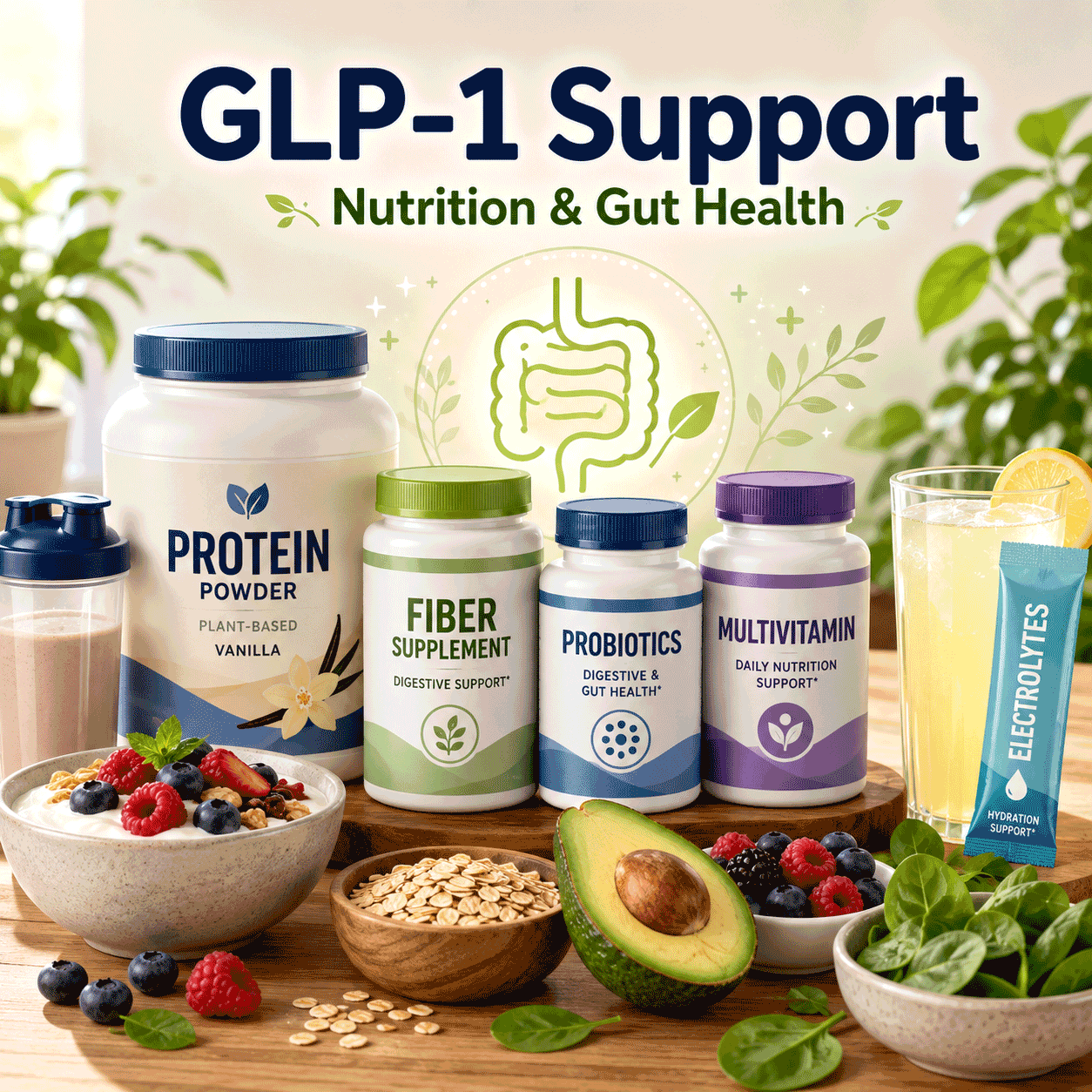
A brand could develop a product line where protein, fiber, essential nutrients, and healthy fats work together as separate but connected products. For example, one product may focus on high quality protein and lean muscle mass. Another may focus on gut health and fiber. Another may provide electrolyte and micronutrient support. Another may focus on healthy fats. This kind of product line is more credible than one product that claims to do everything.
Balanced meals remain the foundation. Supplements are useful because they are convenient, standardized, and easy to integrate into daily life, but they should not replace whole foods. Whole grains, lean proteins, fruits, vegetables, fermented foods, and healthy fats still matter. Consumers need to understand that supplements support healthy habits; they do not replace them.
Gut Health, Digestive Health, and the GLP-1 Consumer
Why Gut Health Fits the GLP-1 Support Category
Gut health is already one of the strongest categories in dietary supplements, and it fits naturally with GLP-1 support. GLP-1 is deeply connected to the digestive system, food intake, appetite regulation, and metabolic signals. At the same time, consumers using GLP-1 medications or following a weight management plan may become more aware of digestive comfort, bowel regularity, food tolerance, bloating, hydration, and gut bacteria.
A GLP-1 support supplement focused on gut health can include probiotics, prebiotics, fiber, postbiotics, digestive enzymes, or fermented foods-inspired ingredients. Probiotics are live microorganisms that, when used appropriately, are associated with gut health positioning. Prebiotics support beneficial gut bacteria by serving as substrates for fermentation. Some ingredients may help support short chain fatty acids production by gut bacteria, depending on the formula and diet.
The phrase improve gut health is common in consumer searches, but brands should use it carefully. A safer marketing approach is to say “support gut health,” “support digestive health,” or “support a healthy gut microbiome.” If a brand uses educational content around improving gut health, it should include lifestyle context such as fiber-rich food, fermented foods, hydration, regular exercise, and balanced meals.
Digestive health formulas should also consider consumer tolerance. Fiber can be helpful, but too much too quickly may cause discomfort for some users. Probiotics require strain selection, stability planning, and proper packaging. Digestive enzymes need clear rationale and dosage. Gummies may be attractive but may not be suitable for every probiotic or fiber dose. Capsules, powders, sachets, and stick packs may be better depending on the formula.
Probiotics, Fermented Foods, and the Healthy Gut Microbiome
Probiotics and fermented foods are familiar concepts for many consumers. Yogurt, kefir, kimchi, sauerkraut, miso, and other fermented foods have made the microbiome conversation more mainstream. This consumer awareness can help brands explain why gut health matters in a GLP-1 support routine.
A healthy gut microbiome is influenced by diet, lifestyle habits, fiber intake, sleep, stress, food choices, and regular exercise. Supplements can support this ecosystem, but they cannot fix poor habits alone. This is important for brand education. A strong product page or blog article should avoid presenting probiotics as magic. Instead, it should explain that probiotics, fiber, fermented foods, lean proteins, whole grains, and balanced meals can work together as part of a broader digestive health routine.
Brands should also understand that probiotic science is strain-specific. One probiotic is not the same as another. If a product makes a specific claim, the brand should have scientific evidence for the strain, dose, and intended use. Many probiotic products are successful because they have a simple message, strong stability, good packaging, and a clear customer need. For GLP-1 support, the customer need may include digestive comfort, regularity, microbiome balance, or daily gut health support.
Postbiotics may also be worth exploring because they can be easier to formulate in certain dosage forms and may have better stability than some live microorganisms. However, this area still requires careful claim review and more research for certain positioning ideas. Brands should avoid saying a postbiotic or probiotic can directly replace GLP-1 medications or cause prescription-level appetite effects.
Digestive System Comfort and Product Format
Digestive system comfort is a practical issue in the GLP-1 support category. Consumers may be eating differently, drinking less or more, changing meal size, increasing protein intake, adding fiber, or using other supplements. All these changes can affect how a product feels in the body.
A formula that looks strong on paper may fail if the consumer experience is poor. For example, a high-fiber drink that becomes too thick may not be appealing. A protein powder with poor taste may be difficult to finish. A capsule product with too many capsules per serving may create low compliance. A gummy formula may taste great but may not deliver enough active ingredients. A tablet may be convenient but may not fit a high-dose formula.
This is why product development should connect nutrition science with real consumer behavior. A GLP-1 support supplement should be simple enough to use consistently. It should fit into morning routines, post-exercise routines, travel routines, or meal routines. It should also be easy to explain on packaging and online marketplaces.
For brands, the best format depends on the product purpose. Protein is often better in powders, shakes, or ready-to-mix formats. Fiber is usually more practical in powders or stick packs. Probiotics can work in capsules, sachets, or certain gummies if stability is controlled. Multivitamins can work in capsules, tablets, gummies, or liquids. Electrolytes often fit powders, tablets, or stick packs. The goal is to match the formula with the format, not force every ingredient into a trendy delivery system.
Compliance, Evidence, and Responsible Brand Positioning
Scientific Evidence, Limited Research, and Ingredient Claims
GLP-1 support is a powerful marketing theme, but it also carries risk. Many consumers are searching for GLP-1 supplements, natural GLP-1 support, reduce hunger solutions, appetite support, weight loss support, and metabolic health products. This search demand can tempt brands to overclaim. That is a mistake.
A responsible brand should separate market interest from scientific evidence. Some clinically studied ingredients may support blood sugar already within a normal range, digestive health, satiety, or weight management when combined with diet and exercise. Some ingredients have been studied in a systematic review, meta analysis, clinical trials, or an article in an American Journal of clinical nutrition or related nutrition publication. But this does not mean every formula can claim the same result, and it does not mean a dietary supplement can claim the same results as prescription medications.
The phrase limited evidence should appear in internal product development discussions. The phrase limited research should also guide the claim strategy. Brands should ask whether the ingredient has human data, whether the dose matches the research, whether the population is relevant, whether the endpoint is appropriate, and whether the claim is allowed in the target market. A compound found in a plant, fiber, or fermented food may be interesting, but the brand still needs proper evidence before making strong claims.
More research is needed in many areas of GLP-1 support supplements, especially when the product claims to influence appetite, GLP-1 levels, insulin sensitivity, blood sugar, or body weight. The safest and most sustainable brand strategy is to focus on nutritional support, not drug-like effectiveness.
Avoiding Risky Weight Loss and Blood Sugar Claims
Weight loss language must be handled with care. Consumers are searching for weight loss, lose weight, weight loss goals, and weight management, so these terms may be relevant for SEO and education. But the product itself should not be written as a treatment or guaranteed outcome.
A dietary supplement brand can discuss the weight loss journey as a consumer context. It can explain that many consumers trying to manage body weight are paying closer attention to protein, fiber, gut health, resistance training, balanced meals, and regular exercise. It can discuss how muscle loss may be a concern during reduced food intake. It can explain why lean body mass and lean muscle mass matter. It can develop formulas that support healthy habits. But it should not promise significant weight loss or claim that the product causes users to lose weight in the same way as prescription medications.
Blood sugar claims also need careful review. Some consumers connect GLP-1 with blood sugar and insulin sensitivity. However, dietary supplements should not claim to treat diabetes or replace other medications. In many markets, a safer expression may be “supports healthy blood sugar levels already within the normal range,” but even this depends on local compliance rules and the evidence behind the formula.
Brands should also review claims across all customer touchpoints. A label may be careful, but a marketplace listing may be risky. A blog article may be balanced, but a social media ad may overpromise. Influencer content may accidentally create disease claims. For GLP-1 support, compliance should cover product names, subtitles, ingredient descriptions, website pages, ads, videos, email campaigns, and customer service scripts.
Why Healthcare Professional Guidance Matters
A GLP-1 support supplement should not replace the role of a healthcare professional. Consumers using GLP-1 medications may have medical conditions, prescriptions, other medications, digestive issues, blood sugar concerns, or individualized nutrition needs. A supplement brand cannot provide personalized medical advice through a product label or online listing.
Brands should encourage consumers to speak with a healthcare professional before starting new supplements if they are pregnant, nursing, taking prescription medications, managing blood sugar, experiencing digestive problems, or making major diet and lifestyle changes. This is especially important if the formula includes minerals, botanicals, fiber, caffeine, probiotics, or ingredients that may interact with other medications or digestive tolerance.
This type of language does not weaken the product. It strengthens the brand’s credibility. In a category as sensitive as GLP-1 support, responsible positioning can help brands build trust with customers, retailers, practitioners, and distribution partners.
Product Development Ideas for GLP-1 Support Brands
Protein and Sports Nutrition Concepts
A protein-forward GLP-1 support supplement may be one of the most practical product ideas. It can serve consumers who are eating smaller portions but want to maintain high quality protein intake. It can also fit into sports nutrition and active lifestyle positioning.
The product could focus on lean proteins, lean muscle mass, resistance training, strength training, recovery, and daily protein intake. The formula may include protein plus vitamins, electrolytes, or digestive enzymes depending on the brand’s positioning. For consumers who experience low appetite, a light protein serving may be more appealing than a heavy meal replacement.
The brand message should be clear. This is not a prescription medication and not a promise of weight loss. It is a nutrition support product for people who want to maintain protein intake, support muscle maintenance with exercise, and build healthy habits during a body weight management journey.
Fiber, Prebiotic, and Gut Health Concepts
A fiber and prebiotic GLP-1 support formula can focus on digestive health, gut health, and daily fiber intake. This is useful because many consumers do not consume enough fiber from food, especially when their eating habits change. The product can be positioned around gut bacteria, short chain fatty acids, healthy gut microbiome support, regularity, and food choices that include whole grains, fruits, vegetables, legumes, and fermented foods.
The formula should be developed with tolerance in mind. A gentle fiber blend may be better than a very high-dose formula for some consumers. Taste and texture are also critical. If the product is too gritty, too thick, too sweet, or difficult to mix, customers may not continue using it.
A brand can support this formula with educational content about how to improve gut health through diet, hydration, and healthy habits. Again, the final claim should be “support” rather than a guaranteed improvement or medical outcome.
Electrolyte, Hydration, and Energy Support Concepts
Hydration can be another useful angle. Some consumers changing their diet may not drink enough fluids or may change their electrolyte intake. An electrolyte formula can be positioned around hydration support, energy levels, normal muscle function, and active daily life.
This category can work well in stick packs, sachets, effervescent tablets, powders, or liquids. It can also be combined with B vitamins for energy metabolism or magnesium for muscle relaxation and normal muscle function, depending on the target market and compliance requirements.
The product should not claim to treat dehydration or medical side effects. Instead, it can support daily hydration routines, especially for consumers focused on wellness, exercise, and balanced nutrition.
Multivitamin and Essential Nutrients Concepts
A multivitamin and mineral formula can help brands address essential nutrients in the GLP-1 support category. This type of formula may be designed for consumers who want nutritional insurance while they adapt to smaller meals and changing food intake.
The key is not to create an overloaded product. Brands should focus on nutrients that make sense for the target audience and dosage form. Capsules and tablets can work for comprehensive formulas. Gummies can be more consumer-friendly but may have dosage limitations. Liquids may offer a different experience but require careful stability and taste work.
The product message should focus on daily nutritional support, essential nutrients, and healthy routines. It should avoid implying that the product corrects medical deficiencies unless that claim is supported and allowed in the target market.
How Brands Can Launch GLP-1 Support Supplements Responsibly
Start With the Consumer, Not the Trend
GLP-1 is a hot topic, but a hot topic alone is not a product strategy. A brand should first understand the consumer’s real needs. Is the customer trying to maintain lean muscle mass? Is the customer worried about digestive health? Does the customer want convenient protein? Does the customer need help with fiber intake? Is the customer looking for hydration support? Does the customer want a simple multivitamin while eating smaller meals?
A strong product should answer one clear need. If the product tries to support appetite, protein, gut health, blood sugar, energy, hydration, muscle, mood, and weight management all at once, it may become confusing. Customers need clarity. Retailers need clarity. Online marketplaces need clarity. The formula should have a reason to exist.
Use Claims That Match the Formula
The claim should match the ingredients, dosage, evidence, and product format. If the formula is mostly protein, the message should focus on protein and muscle support. If the formula is mostly fiber, the message should focus on digestive health and gut health. If the formula is a multivitamin, the message should focus on essential nutrients. If the formula includes probiotics, the message should focus on gut microbiome support.
This seems simple, but many brands make the mistake of using the largest trend word instead of the strongest formula truth. GLP-1 support should be the market context. The real product benefit should come from the actual formula.
Plan the Product Line, Not Just One SKU
A single GLP-1 support supplement may not meet every consumer need. Brands may do better by developing a product line that includes protein, fiber, probiotics, electrolytes, vitamins, and healthy fats as separate products with connected positioning. This allows each product to have a clear function and a stronger formula design.
A product line can also support different formats. Powders can deliver protein and fiber. Capsules can deliver probiotics or digestive enzymes. Tablets can deliver vitamins and minerals. Gummies can offer convenient daily wellness support. Liquids can support hydration or fast-use formats. This gives customers more flexibility and helps brands create a broader routine.
Choose a Manufacturing Partner With Clinical Nutrition and Compliance Experience
GLP-1 support is not a category where brands should rely only on trend-chasing. Product development requires clinical nutrition thinking, supplement manufacturing experience, flavor and format knowledge, quality control, labeling review, and compliance awareness. A manufacturing partner should understand the difference between dietary supplements and prescription drugs. The team should also understand how to create formulas that are practical, stable, great tasting, and suitable for the target market.
The right partner can help brands select clinically studied ingredients, avoid risky claims, design clean labels, choose the right dosage form, and scale production. This is especially important for brands selling through online marketplaces, international distributors, or professional wellness channels.
Conclusion: GLP-1 Support Is a Nutrition Opportunity, Not a Drug Replacement
GLP-1 is changing the supplement industry because it is changing how consumers think about appetite, body weight, food intake, blood sugar, metabolic health, and daily nutrition. As consumers adjust their eating habits and lifestyle habits, they may become more interested in dietary supplements that support protein intake, lean body mass, gut health, digestive health, hydration, essential nutrients, healthy fats, and regular exercise.
For brands, this creates a meaningful opportunity. But the opportunity must be handled responsibly. GLP-1 supplements should not be positioned as prescription medications, prescription drugs, or replacements for GLP-1 medications. They should not promise significant weight loss, treat disease, or claim the same results seen in drug clinical trials.
The strongest brand strategy is to develop GLP-1 support formulas that fit real consumer needs. Protein can support lean muscle mass when combined with strength training and resistance training. Fiber can support digestive health and a healthy gut microbiome. Probiotics and fermented foods concepts can support gut health education. Vitamins and minerals can help support essential nutrient intake. Electrolytes can support hydration and energy levels. Healthy fats can support balanced meals and overall nutrition.
A successful GLP-1 support supplement is not built on hype alone. It is built on scientific evidence, responsible claims, practical formulation, quality manufacturing, clear labeling, and honest education. Brands that understand this balance can create products that support consumers during a modern weight management journey while staying aligned with health, compliance, and long-term trust.