

09 Oct Probiotics, Prebiotics and Synbiotics: How to Build a Gut Health Supplement Line
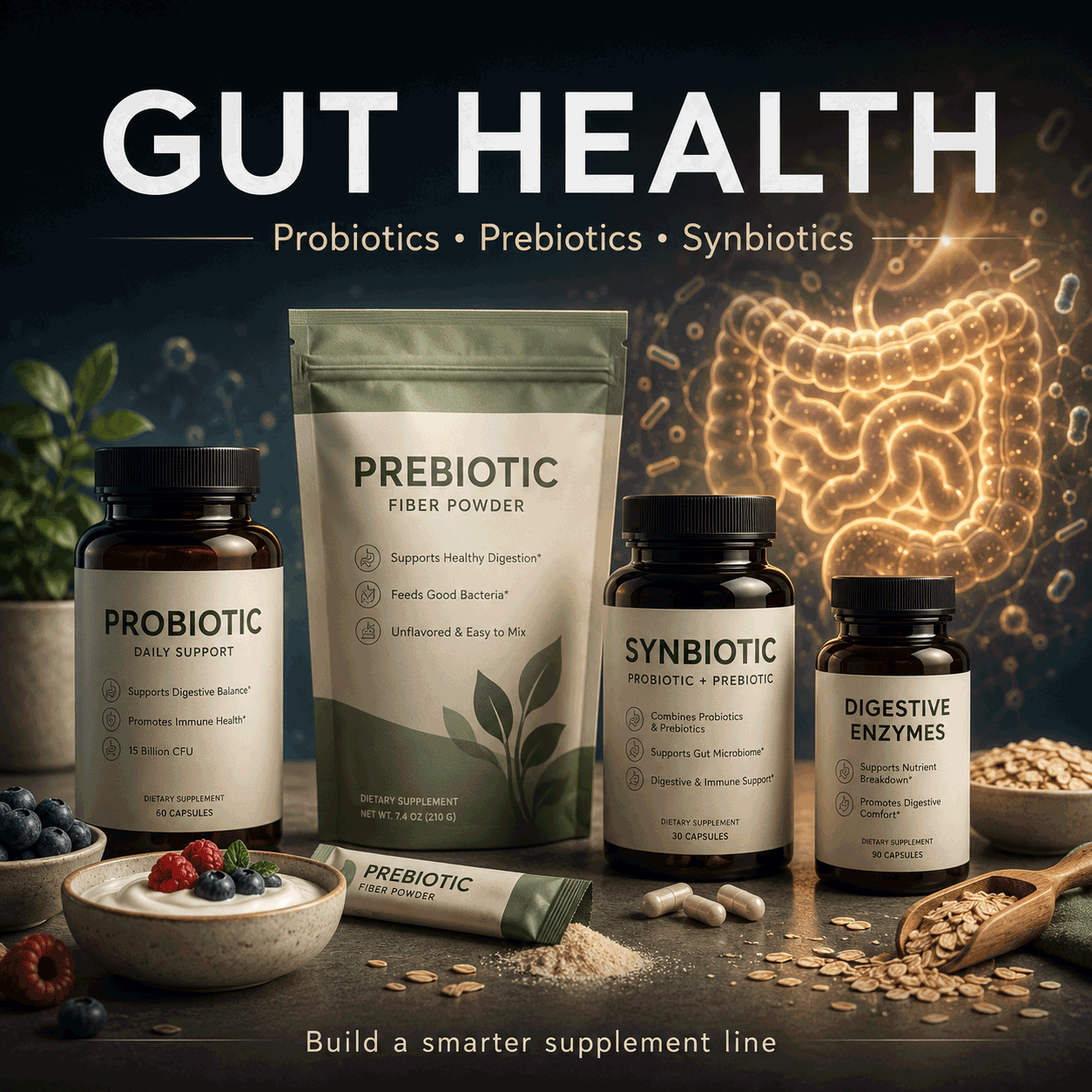
Gut health has become one of the most important long-term themes in the supplement industry. It is no longer a narrow digestive health topic for consumers who only think about stomach comfort. Today, gut health is connected with the gut microbiome, digestive system balance, immune health, healthy aging, daily energy, food choices, skin wellness, vaginal health, overall well being, and broader lifestyle routines. For dietary supplement brands, this creates a strong opportunity to develop a complete gut health supplement line that includes probiotic supplement products, prebiotics, synbiotics, digestive enzymes, postbiotics, fiber supplement concepts, and fermented foods-inspired formulas.
A successful probiotic product is not built only by adding live bacteria to a capsule or powder. It requires a clear understanding of probiotic strains, CFU, shelf life, moisture control, packaging, product labels, stability testing, and consumer education. It also requires responsible claims. A probiotic supplement should support digestive health, support digestion, support a healthy gut microbiome, or support overall gut health. It should not be positioned as a treatment for a medical condition.
This distinction matters because consumers are increasingly self-directed. They search for probiotics, fermented foods, natural probiotics, digestive enzymes, gluten free supplements, daily probiotic routines, and products that may reduce bloating or support bowel movements. At the same time, they may also search for terms like irritable bowel syndrome, stomach pain, immune system support, blood sugar, and gut barrier function. These terms are important for understanding consumer interest, but brands must handle them carefully. A dietary supplement should not promise to diagnose, treat, cure, or prevent disease.
For B2B brands, the biggest opportunity is to build a gut health line with clarity. The market does not need another generic probiotic product with vague claims and high CFU numbers. It needs products that are easier to understand, easier to use, supported by quality controls, and designed around real consumer needs. A daily probiotic, a synbiotic powder, a digestive enzymes capsule, a postbiotic product, and a fermented foods-inspired blend can all play different roles in the same product line.
Why Gut Health Is a Strong Long-Term Supplement Category
Gut Health, Digestive Health and Healthy Aging Demand
Gut health is becoming a daily wellness priority because consumers increasingly understand that the gut is not only about digestion. The digestive tract is home to a complex community of gut bacteria and other microorganisms. This community is often called the gut microbiome. A healthy gut microbiome is associated with digestive comfort, regular bowel movements, nutrient processing, immune response, and overall health.
This does not mean every probiotic supplement can deliver every possible benefit. The effectiveness of probiotics can vary based on the individual’s gut microbiome, diet, health conditions, probiotic strains, dose, and product quality. Different probiotics have different functions in the body, and the effects of probiotics are strain specific. This is one of the most important points brands need to understand.
Consumers are also connecting gut health with healthy aging. As people age, they may become more interested in digestion, immune health, nutrient absorption, regularity, and maintaining daily function. Older adults may also pay closer attention to food choices, fiber intake, fermented foods, and products that support overall well being. This creates product opportunities beyond a single daily probiotic. Brands can develop products for digestive health, active aging, immune health support, women’s wellness, and everyday gut microbiome support.
The category also fits the broader shift toward proactive health. Consumers are not only waiting for symptoms before making changes. Many want to support digestion, support digestive health, and maintain overall gut health as part of daily life. This is why probiotic supplement products, fiber supplement concepts, digestive enzymes, and synbiotics can fit into routine-based wellness positioning.
For brands, the key is to stay practical. Gut health products should not be presented as miracle solutions. Diet plays a greater long-term impact on the gut microbiome than supplements alone. A healthy diet rich in fiber, plant foods, fermented foods, and balanced nutrients remains the foundation. Supplements can support the routine, but they should not replace good food choices.
From Fermented Foods to Daily Probiotic Habits
Fermented foods have helped make gut health more familiar to everyday consumers. Foods such as yogurt, kefir, kimchi, sauerkraut, miso, and other fermented foods are commonly associated with digestion and natural probiotics. This familiarity can help brands explain probiotics in a way that feels less technical and more connected to daily life.
However, it is important to explain the difference between fermented foods and a probiotic supplement. Not every fermented food contains live microorganisms at the time of consumption. Not every fermented food contains specific strains that have been studied for health benefits. Some fermented foods may contain live bacteria, while others may be pasteurized or processed in ways that reduce or eliminate live microorganisms. Some foods are fermented for flavor or preservation rather than probiotic function.
A probiotic supplement can offer more control. It can provide specific probiotic strains, a defined CFU amount, a clear serving size, and more standardized product labels. For brands, this makes dietary supplements useful when the goal is to create a daily probiotic routine with predictable formulation and positioning.
Still, brands should avoid telling consumers that supplements are always better than food. A smarter approach is to position a probiotic product as part of a complete gut health lifestyle. Fermented foods, whole foods, fiber-rich meals, hydration, sleep, movement, and stress management all influence the gut. A daily probiotic can support the routine, but it should not be described as a replacement for the diet.
Fermented foods also inspire product development. A brand may create fermented foods-inspired powders, drink mixes, gummies, capsules, or functional foods. These products can use flavor cues, ingredient stories, or postbiotic concepts inspired by fermentation. But if the product is labeled as a probiotic, the brand should be able to support the presence of live microorganisms and the intended CFU through shelf life.
Probiotic Product Basics: Strains, CFU and Gut Microbiome Positioning
Probiotics Are Live Microorganisms, but Strain Selection Matters
Probiotics are live microorganisms intended to provide a health benefit when consumed or applied to the body in adequate amounts. In the supplement industry, they are often described as beneficial bacteria, beneficial gut bacteria, or live bacteria. However, a professional probiotic product should be more specific than this. It should identify the organisms clearly and use appropriate strain information.
A probiotic name often includes genus, species, and strain. For example, Lactobacillus rhamnosus and Bifidobacterium longum are well-known species names in the category, but the strain level is often where the most important evidence sits. A specific probiotic strain may have research related to digestive health, immune health, vaginal health, antibiotic-associated diarrhea, or other areas. Another strain from the same species may not have the same evidence.
This is why strain specific product development matters. A brand should not assume that all probiotics work the same way. A specific probiotic strain should be selected based on the target consumer, product format, evidence, stability, manufacturing process, and desired claim language. If the product is designed to support digestive health, the strain choice should match that direction. If the product is designed for women’s vaginal health, the strain selection should be different. If the product is designed for immune health, the formula should be supported by strains studied in that context.
Multiple strains can be useful, but more strains do not automatically make a better product. A multi-strain formula may provide a broader positioning story, but it can also create stability, testing, and label complexity. Each strain may have different oxygen sensitivity, moisture tolerance, temperature sensitivity, and growth conditions. The manufacturer must be able to verify identity, potency, and stability for the finished product.
This is one reason why brands should avoid developing probiotic supplement products only from a marketing perspective. A label that lists many probiotic strains may look impressive, but if the strains are not stable, not present in meaningful amounts, or not supported by relevant evidence, the product may not deliver a strong customer experience.
CFU, Product Labels and Why Higher Is Not Always Better
CFU stands for colony forming units. It is commonly used to describe the number of viable microorganisms in a probiotic supplement. Many product labels show CFU per serving, such as 1 billion, 10 billion, 50 billion, or more. Consumers often assume that higher CFU means a stronger or better product, but this is not always true.
The right CFU depends on the specific strains, intended use, evidence, product format, and shelf life. Some specific strains may be studied at lower CFU levels, while other formulas may use higher amounts. A high CFU count does not automatically prove effectiveness. A lower CFU product with the right strain and strong stability may be more credible than a very high CFU product with unclear strain information and weak testing.
The timing of CFU claims is also important. Probiotics must be consumed alive to provide probiotic effects. Live microorganisms can decline during storage, especially if they are exposed to heat, moisture, oxygen, or unsuitable packaging. Therefore, a professional probiotic product should consider the CFU amount at the end of shelf life, not only at the time of manufacture.
This is very important for product labels. If a product says it provides 10 billion CFU, brands should be clear whether this amount is guaranteed through expiration or only present at the time of manufacture. From a customer trust perspective, end-of-shelf-life CFU is more meaningful. A product that looks strong at production but loses potency quickly may create disappointed customers and poor repeat purchase.
Brands should also consider whether product labels include total microorganism weight, CFU, strain information, storage instructions, allergens, gluten free claims, and directions for use. If a product requires refrigeration, that should be clear. If it is designed for room temperature stability, the stability data should support that claim. If it is gluten free, the formula and manufacturing controls should support that label statement.
In the supplement industry, product labels are not only marketing tools. They are part of consumer safety, compliance, quality communication, and brand trust.
Daily Probiotic, Adjustment Period and Consumer Experience
A daily probiotic should be easy to understand and easy to use. Consumers should know when to take probiotics, how many servings to take, whether to take the product with food or on an empty stomach, and what to expect during the adjustment period.
Some probiotic supplement products suggest taking probiotics with a meal, while others may be designed for an empty stomach. The right instruction depends on the strain, product format, coating, stability, and formulation. Brands should avoid giving one universal rule for all probiotics. Instead, the directions should match the product’s design and supporting data.
Consumer experience is also important. Some people may experience mild gas, bloating, upset stomach, or changes in bowel movements when they start taking probiotics, prebiotics, or synbiotics. This can be described as an adjustment period. For most healthy adults, mild digestive changes may be temporary, but brands should avoid minimizing consumer concerns. If symptoms are severe, persistent, or include stomach pain, the consumer should stop use and consult a healthcare professional.
This is especially important for products that combine probiotics with a fiber supplement or prebiotic. Prebiotics can feed beneficial gut bacteria, but they may also increase gas or bloating in some people at the beginning. A gentle starting dose, clear directions, and consumer education can help improve the experience.
A daily probiotic should also fit the consumer’s lifestyle. Capsules are simple and familiar. Powders can be mixed into drinks. Gummies are convenient and friendly, but they may be harder to stabilize. Liquids can be appealing but may have shorter shelf life or more complex storage needs. Oral probiotic formats for general gut health are different from formulas designed for vaginal health, kids, or clinical nutrition settings. The product format should match the consumer need.
Prebiotics, Synbiotics, Digestive Enzymes and Postbiotics
Prebiotics as Fuel for Beneficial Gut Bacteria
Prebiotics are commonly described as ingredients that help nourish beneficial gut bacteria. Many prebiotics are fibers or fiber-like compounds. They may include inulin, fructooligosaccharides, galactooligosaccharides, resistant starch, partially hydrolyzed fibers, and other ingredients depending on the target market and formulation strategy.
A prebiotic product can be a strong part of a gut health supplement line because it supports the environment of the gut microbiome rather than only adding live bacteria. Prebiotics can be developed as powders, stick packs, capsules, gummies, tablets, or functional food ingredients. They can be positioned around digestive health, regularity, microbiome support, and fiber intake.
Fiber supplement products are especially relevant because many consumers do not get enough fiber from food. However, brands should still encourage a food-first approach. Whole foods, vegetables, fruits, legumes, whole grains, nuts, and seeds provide fiber along with other nutrients. A fiber supplement can help support daily intake, but it should not replace balanced food choices.
Prebiotic dosage and tolerance matter. A strong prebiotic formula may not be successful if it causes too much gas, bloating, or upset stomach. Some consumers need an adjustment period. A product can be designed with a gentle prebiotic amount, gradual use instructions, or a combination of fibers to improve tolerance.
Prebiotics can also be paired with probiotics to create synbiotics. This strategy can make a formula more complete, but it also increases the need for clear formula logic. A prebiotic should not be added only because it sounds good. It should support the product purpose and be compatible with the probiotic strains, dosage form, taste, stability, and consumer experience.
Synbiotics: Combining Probiotics and Prebiotics With Clear Formula Logic
Synbiotics combine probiotics and prebiotics. In simple terms, they pair live microorganisms with ingredients that help support beneficial bacteria in the gut. This can create a stronger product story for brands building a gut health line.
However, a synbiotic is not just a probiotic plus any fiber. A well-developed synbiotic should consider strain selection, prebiotic type, dose, format, water activity, storage conditions, taste, and digestive tolerance. If the formula includes live bacteria, the brand must still protect probiotic viability through shelf life. If the formula includes fiber, the brand must consider texture, solubility, and adjustment period.
Synbiotic capsules may be useful for daily digestive health routines. Synbiotic powders or stick packs may work well when the formula needs more fiber. Synbiotic gummies may be attractive for mainstream customers, but they are technically more challenging. Gummies contain moisture, sweetness systems, acidity, and processing heat, all of which may affect live microorganisms. Brands should be careful before choosing gummies for live probiotics unless the manufacturer has the right technology and stability data.
A synbiotic product can be positioned around overall gut health, support digestion, support digestive health, and support a healthy gut microbiome. It should avoid disease claims. For example, a brand should be careful with statements about irritable bowel syndrome. Some specific strains have been studied in relation to IBS symptoms, and some systematic review evidence exists for certain uses, but not all probiotics are appropriate for all symptoms or all consumers. A product label should not claim to treat IBS unless it is legally allowed and supported in the target market. A safer education approach is to advise consumers with a medical condition to consult a healthcare provider.
A strong synbiotic line may include different formulas for different customers. One product may be a daily probiotic and prebiotic capsule. Another may be a fiber-rich synbiotic powder. Another may be a women’s wellness oral probiotic. Another may be a shelf-stable postbiotic and prebiotic combination. This allows brands to build a product line rather than overloading one formula.
Digestive Enzymes as an Adjacent Digestive Health Category
Digestive enzymes are not probiotics. They do not work by adding beneficial bacteria to the gut microbiome. Instead, digestive enzymes help break down components of food, such as proteins, fats, carbohydrates, fiber, or lactose, depending on the enzyme type. This makes them an adjacent but different category in digestive health.
A digestive enzymes product can fit into meal support positioning. It may be taken with meals to support digestion of certain nutrients. For example, a product may focus on protein digestion, dairy digestion, carbohydrate digestion, or general meal comfort. This category can be useful for consumers who are interested in digestive system support but do not necessarily want a daily probiotic.
Digestive enzymes can also be combined with probiotics, but brands should be careful. The formula should not become confusing. A product that combines probiotics, prebiotics, digestive enzymes, herbs, and fibers may look comprehensive, but the consumer may not understand what the product is for. It may also become harder to dose each ingredient properly.
Digestive enzymes usually work well in capsules or tablets because they are often taken with meals. Powders are possible, but taste and stability may be more challenging. Gummies may be less suitable for certain enzymes depending on the formulation and processing conditions.
The marketing language should remain responsible. Digestive enzymes can support digestion, but they should not be positioned as treatment for digestive diseases. Consumers with persistent stomach pain, severe digestive symptoms, unexplained weight changes, blood in stool, or a diagnosed medical condition should seek advice from a healthcare professional.
Postbiotics and Fermentation-Inspired Products
Postbiotics are becoming more interesting for brands because they may offer better stability than live microorganisms in some product formats. They can be used in capsules, powders, gummies, stick packs, and functional foods. Postbiotics are not the same as probiotics because they are not live microorganisms. This distinction should be clear on product labels and marketing materials.
Postbiotics can support a gut health product line when brands want room temperature stability, easier handling, or broader format flexibility. They can also fit fermented foods-inspired positioning because they connect to fermentation science without requiring live bacteria in the final product.
However, brands should avoid presenting postbiotics as automatically better than probiotics. They are different tools. A probiotic supplement is built around live microorganisms. A postbiotic product is built around inactivated microorganisms or their components, depending on the ingredient definition and market. The benefits, evidence, and claims should be specific to the ingredient used.
Postbiotics can also be combined with prebiotics and probiotics in advanced synbiotic-style products. But again, formula clarity matters. Consumers should be able to understand why the product includes each component and how it supports overall gut health.
Product Development: Encapsulation, Shelf Life and Room Temperature Stability
Encapsulation Technology and Shelf-Stable Probiotic Supplement Design
The technical challenge of probiotic supplement development is stability. Probiotics are live microorganisms, which means they can be affected by heat, moisture, oxygen, light, pressure, processing conditions, and time. A product that starts with a high CFU count may not maintain that count through shelf life if the formulation and packaging are not designed correctly.
Encapsulation technology can help protect probiotic strains. Microencapsulation, protective coating, and other delivery technologies may help improve survival during manufacturing, storage, and passage through the stomach. Some technologies are designed to protect live bacteria from moisture or acidity. Others may help improve shelf stability or targeted release in the digestive tract.
For B2B product development, encapsulation should not be treated as a marketing word only. Brands should ask what the technology does, which strains it is used with, how it affects stability, and whether there is testing to support the claim. If the product is described as shelf-stable or room temperature stable, the manufacturer should have data to support that statement.
Not every probiotic strain is suitable for every product format. Capsules and sachets are often easier to stabilize than gummies or liquids. Powders can work well if moisture is controlled. Stick packs can be strong for travel and daily routines. Gummies are attractive but challenging because they contain moisture and may involve heat during production. Liquids are even more challenging for many live microorganisms unless the formula and storage conditions are specifically designed for viability.
Room temperature stability is valuable because it improves distribution flexibility and customer convenience. A shelf-stable probiotic product can be easier to sell through online marketplaces, retail stores, international shipping, and travel-oriented channels. However, stability must be real, not assumed. Temperature excursions during shipping can affect live bacteria, especially in hot climates. Packaging, desiccants, oxygen absorbers, and barrier materials can all play a role.
A professional manufacturer should design the probiotic product from the strain outward. The strain selection, overage strategy, encapsulation system, excipients, water activity, packaging, storage instructions, and testing plan should work together. If these pieces are not aligned, the finished product may not maintain its label claim.
CFU, Moisture Control, Packaging and Stability Testing
CFU testing is central to probiotic quality. A brand should know how CFU is measured, when it is measured, and whether the result applies to the finished product or only the raw material. Testing the raw material is not enough if the manufacturing process, packaging, and storage can reduce viability.
Moisture control is especially important. Probiotics generally do not like high moisture environments unless the product is designed for that format. Moisture can activate or damage live microorganisms and may reduce shelf life. This is why powders, capsules, and sachets often use moisture-protective packaging. Bottles may include desiccants. Stick packs may use high-barrier films. Pouches may require strong sealing and moisture protection.
Packaging is not only a design decision. It is part of the formula. If a product uses a low-barrier package, the probiotic may lose viability more quickly. If a product is shipped in high-temperature environments without protection, CFU may decline. If a gummy contains too much moisture or has the wrong pH, the probiotic strains may not survive as expected.
Stability testing should include both accelerated and real-time testing where appropriate. It should evaluate CFU, appearance, odor, taste, texture, moisture, microbial safety, and other relevant quality parameters. For multi-strain products, brands should also consider whether individual strains can be verified, not only total count. This can be complex, but it matters for high-quality product development.
Product labels should be aligned with stability data. If the product claims 10 billion CFU through expiration, the formulation should be designed with enough overage and stability support to meet that claim. If the product needs refrigeration, the label should say so clearly. If the product is room temperature stable, the data should support that condition.
For gluten free, dairy free, vegan, non-GMO, or major allergens statements, the brand should have supporting documentation. Major allergens need careful review in probiotic supplement manufacturing because some strains or fermentation media may involve dairy, soy, or other allergen-related materials. A gluten free probiotic product should be supported by supplier controls and testing where appropriate. These claims matter to customers and should not be used casually.
Quality Control for Probiotic Strains and Finished Products
Quality control for probiotics includes identity, potency, purity, stability, and safety. Identity means confirming that the product contains the correct probiotic strains. Potency means the product contains the promised viable count. Purity means the product is not contaminated with unwanted microorganisms or materials. Stability means the product maintains its key quality attributes through shelf life. Safety means the product is appropriate for the target consumer and used with proper warnings.
The supplement industry is competitive, and quality can vary. In many markets, dietary supplements are not approved before sale in the same way as prescription drugs. Manufacturers and brands are responsible for ensuring product safety, label accuracy, and compliance with applicable regulations. This makes quality systems especially important for probiotic products.
A strong probiotic product should have supplier qualification, raw material testing, strain documentation, manufacturing controls, environmental controls, finished product testing, stability data, and complaint monitoring. For vulnerable populations, such as infants, people with a weakened immune system, severely ill patients, or people with serious health conditions, the safety and quality expectations should be even higher.
Brands should also be careful with imported and cross-border products. Storage and transport conditions can affect probiotics. A product manufactured with strong CFU levels may decline if it is stored poorly, shipped without temperature consideration, or kept in unsuitable warehouse conditions. For international distribution, the product’s stability profile should match the logistics reality.
How to Build a Gut Health Supplement Line for Different Customers
Daily Probiotic Capsules for General Gut Health
Daily probiotic capsules can serve as the foundation of a gut health supplement line. They are familiar, easy to use, and suitable for many consumers. A daily probiotic capsule may focus on support digestive health, support digestion, and support a healthy gut microbiome. It can use one specific probiotic strain or multiple strains, depending on the product strategy.
For general wellness, the formula should be simple and clear. Consumers should understand the CFU, strain information, serving size, storage instructions, and expected adjustment period. The product should be easy to fit into a daily routine.
A capsule product can also be segmented by audience. A basic adult daily probiotic may use a broad digestive health positioning. A women’s formula may include strains selected for vaginal health or urinary tract-related wellness support, depending on evidence and local compliance. An older adult formula may focus on digestive regularity and healthy aging. A travel product may focus on digestive routine support during changes in food choices and environment.
The main point is that one daily probiotic cannot be everything for everyone. Strong product lines are built with specific consumer needs in mind.
Synbiotic Powders, Stick Packs and Fiber Supplement Concepts
Synbiotic powders and stick packs are useful when the formula includes prebiotics or fiber supplement ingredients that require a larger serving size. Capsules may not be practical for meaningful fiber amounts. Powders allow more room for prebiotic fibers, probiotics, postbiotics, vitamins, minerals, flavors, and digestive health ingredients.
A synbiotic powder can be positioned for daily gut health, regularity support, fiber intake, and microbiome support. It can also be developed around taste, convenience, and routine. For example, a stick pack can be mixed with water, smoothies, yogurt, or other foods. This makes the product easier to connect with lifestyle content.
However, powders also require careful formulation. Fiber can affect texture, viscosity, sweetness, and stomach comfort. Some fibers may create more gas or bloating than others. Probiotics in powders require moisture control and packaging protection. If the powder is flavored, the acid system and flavor ingredients must be compatible with probiotic stability.
A strong synbiotic powder should not overpromise. It can support digestive health and support overall gut health, but it should not claim to cure constipation, treat irritable bowel syndrome, or fix the gut microbiome overnight. Brands should educate consumers that diet, hydration, and consistency are important.
Probiotic Gummies and Consumer-Friendly Formats
Probiotic gummies are attractive because they are easy to take, taste-friendly, and approachable. They may appeal to consumers who dislike capsules or powders. They can also help brands create a more lifestyle-oriented gut health product line.
However, probiotic gummies are technically challenging. Live bacteria are sensitive to moisture, heat, acidity, and storage conditions. Gummies usually contain water and may be produced with heat. This can affect probiotic viability. Brands should not assume that a gummy probiotic will maintain CFU through shelf life unless the formula, strain selection, manufacturing process, and packaging are designed for that purpose.
Gummies also have dose limitations. They may not deliver the same CFU or fiber amount as capsules or powders. If the product includes prebiotics, the dose may be low because too much fiber can affect texture or cause digestive discomfort. Sugar content, sugar alcohols, natural colors, flavors, and allergens also need consideration.
Despite these challenges, gummies can be valuable if developed correctly. They can serve as entry-level daily probiotic products for mainstream consumers. They may be especially useful when the brand wants to make gut health feel simple and enjoyable. The key is to verify potency, avoid exaggerated claims, and make sure the label reflects what the product can reliably deliver.
Digestive Enzymes, Meal Support and Adjacent Products
A complete gut health supplement line can include digestive enzymes as a separate product. This helps brands serve consumers who want support digestion with meals rather than daily microbiome support. A digestive enzymes capsule can be positioned around meal comfort, nutrient breakdown, and digestive system support.
Digestive enzymes can also be combined with probiotics in certain formulas, but the role of each ingredient should be clear. A meal-time enzyme formula is different from a daily probiotic. A synbiotic fiber powder is different from a capsule for lactose digestion support. Clear positioning helps customers choose the right product.
Adjacent products may also include postbiotic capsules, fermented foods-inspired powders, oral probiotic products for women’s health, kids’ gut health formulas, and healthy aging gut microbiome support products. Each should have a clear target customer and claim strategy.
A product line may begin with one daily probiotic, then expand into synbiotics, digestive enzymes, postbiotics, and specialized formulas. This creates a more complete brand story and gives customers multiple ways to support digestive health.
Claims, Safety and Consumer Education
Medical Condition Claims and Healthcare Professional Guidance
Probiotic supplement products often sit close to medical topics. Consumers may search for probiotics for irritable bowel syndrome, diarrhea, taking antibiotics, stomach pain, immune system support, vaginal health, blood sugar, and inflammatory digestive conditions. Some specific probiotic strains have been studied for certain uses, and some systematic review evidence suggests that probiotics may have beneficial effects in some contexts. However, the evidence is strain specific, population specific, and not universal.
Brands must be careful. A dietary supplement should not claim to treat, cure, or prevent a medical condition. A product should not say it treats irritable bowel syndrome, cures diarrhea, prevents infection, fixes immune disease, or treats depression or anxiety. Even if research exists for a specific strain in a specific context, the product claim must be reviewed for the target market.
A safer approach is to use structure and function style language, such as supports digestive health, supports a healthy gut microbiome, supports regular bowel movements, supports immune health, supports vaginal health, or supports overall gut health. The exact wording should be reviewed based on local regulations.
Healthcare professional guidance is important. Consumers with a medical condition, weakened immune system, severe illness, pregnancy, breastfeeding, or use of other medications should consult a healthcare provider before taking probiotics. People taking antibiotics may also ask about probiotics. Some probiotic strains have been studied for antibiotic-associated digestive issues, but timing, strain, dose, and individual health status matter. A healthcare professional can help consumers make safer choices.
This type of safety language does not weaken the product. It builds trust. In gut health, customers want clarity and honesty more than exaggerated promises.
Weakened Immune System, Safety and Adjustment Period
Probiotics have widespread use and a long history of consumption in foods and dietary supplements, especially among healthy adults. However, probiotics are not risk-free for everyone. People with a weakened immune system, serious illness, central lines, premature infants, and certain vulnerable groups may face higher risks from live microorganisms. This is why safety and quality control are essential.
Brands should avoid broad statements such as “safe for everyone.” A better approach is to state that the product is intended for healthy adults unless otherwise specified and that consumers with health conditions should consult a healthcare professional. If the product is designed for children, older adults, pregnant consumers, or vulnerable populations, the quality standards, strain selection, and safety review should be appropriate for that audience.
The adjustment period should also be explained clearly. Mild gas, bloating, or changes in bowel movements can happen when starting probiotics or prebiotics. This does not necessarily mean the product is harmful, but consumers should monitor their response. If they experience severe stomach pain, allergic reaction, fever, persistent symptoms, or worsening symptoms, they should stop taking the product and seek medical advice.
For products with prebiotic fiber, gradual use may improve tolerance. For products with live bacteria, storage instructions should be followed. For consumers taking other medications, product timing may matter. These details help create a better customer experience.
Gluten Free, Major Allergens and Label Transparency
Gut health consumers often care about ingredient transparency. Many are looking for gluten free, dairy free, soy free, vegan, non-GMO, low sugar, clean label, or allergen-conscious products. These claims can help brands stand out, but they must be supported.
A gluten free probiotic supplement should be developed with raw material controls, production controls, and testing where appropriate. Major allergens must be reviewed across the entire supply chain, including fermentation media, excipients, capsule materials, flavors, and processing aids. A probiotic strain may be grown using materials that matter for allergen communication. Brands should ask for documentation instead of assuming.
Label transparency should also cover CFU, strains, serving size, storage, directions, and warnings. If the product contains multiple strains, the label should be clear. If it contains a proprietary blend, brands should still consider whether customers and healthcare professionals can understand what is inside.
Customers are becoming more informed. They compare product labels, read reviews, ask AI tools, and look for evidence. A vague label may reduce trust. A clear label can improve customer confidence, conversion, and repeat purchase.
Educating Consumers Without Overcomplicating the Message
Gut health is scientifically complex, but consumer messaging should be simple. Many consumers do not understand the difference between probiotics, prebiotics, synbiotics, postbiotics, digestive enzymes, fermented foods, and fiber supplements. A brand that explains these differences clearly can gain trust.
A simple educational structure can explain that probiotics are live microorganisms, prebiotics feed beneficial gut bacteria, synbiotics combine probiotics and prebiotics, digestive enzymes support digestion of foods, and postbiotics are non-living fermentation-related ingredients or microbial components depending on the ingredient type. This helps consumers choose the right product.
However, brands should not oversimplify to the point of making incorrect claims. Probiotics do not work the same way for everyone. A specific probiotic strain matters. Higher CFU is not always better. Diet matters. More research is needed in many areas, especially around mental health, blood sugar, skin, and broad immune response claims.
Consumer education should also emphasize consistency. A probiotic supplement may need regular use as part of a daily routine. Diet, fiber intake, fermented foods, hydration, sleep, stress, and physical activity all influence overall gut health. A supplement can support the routine, but it should not replace a healthy lifestyle.
Conclusion: Build a Gut Health Supplement Line Around Stability, Clarity and Trust
Gut health is no longer a single-product category. It is a long-term platform for dietary supplements, functional foods, fermented foods-inspired products, and daily wellness routines. For supplement brands, the opportunity is to build a complete gut health supplement line that includes probiotic supplement products, prebiotics, synbiotics, digestive enzymes, postbiotics, fiber supplement concepts, and specialized formulas for different customers.
A strong probiotic product begins with the right probiotic strains. It should be strain specific, supported by appropriate CFU, and designed for shelf life. It should consider whether the product uses one specific probiotic strain or multiple strains, whether CFU is guaranteed through expiration, and whether packaging protects live microorganisms from moisture, heat, and oxygen.
Prebiotics and fiber supplements can support beneficial gut bacteria and help brands build more complete digestive health formulas. Synbiotics can combine probiotics and prebiotics with a clear formula logic. Digestive enzymes can serve meal support needs. Postbiotics can provide a shelf-stable option for brands that want gut health positioning without relying only on live microorganisms.
Quality is essential. Probiotic supplement products need testing for identity, potency, purity, stability, and safety. Product labels should be clear about strains, CFU, serving size, storage, major allergens, gluten free status, directions, and warnings. A high-quality product should not rely only on large CFU numbers or trendy claims.
Safety and compliance are just as important as formulation. Consumers with a weakened immune system, medical condition, pregnancy, breastfeeding, or use of other medications should consult a healthcare professional before taking probiotics. Brands should avoid claims that imply treatment of irritable bowel syndrome, inflammatory bowel disease, infections, blood sugar disorders, depression, anxiety, or any other disease unless the product is legally authorized for that use in the target market.
The future of gut health will be shaped by clarity, not complexity. Consumers are asking for products they can understand, trust, and use consistently. They want digestive health support, gut microbiome support, food-based wellness, and practical routines. Brands that can combine scientific discipline with simple communication will be better positioned to build long-term trust.
For B2B supplement brands, the goal is not to create the highest CFU probiotic on the shelf. The goal is to create a gut health product line that is stable, well formulated, clearly labeled, responsibly positioned, and aligned with real consumer needs. When probiotic strains, prebiotics, digestive enzymes, packaging, stability testing, and consumer education work together, gut health can become a strong foundation for long-term product line growth.