

05 Nov Collagen and Beauty-from-Within Supplements Powder, Gummies, Capsules or Liquid Shots
Collagen has become one of the most recognizable ingredients in the beauty-from-within supplement market. For many consumers, a collagen supplement is no longer an unfamiliar product. It is associated with skin moisture, skin elasticity, healthy hair, nail growth, connective tissue support, joint health, and active aging. For brand owners, however, the real opportunity is not simply to launch another collagen product. The opportunity is to choose the right dosage form, develop the right formula story, and create a product that fits the target consumer, market channel, serving size, and manufacturing process.
Collagen is the most abundant protein in the human body. It is present in human skin, bones, cartilage, tendons, ligaments, blood vessels, and many connective tissues. As the body ages, natural collagen production gradually changes, and this is one reason collagen has become strongly connected with skin aging, joint discomfort, and beauty benefits in the consumer mind. Collagen type I is especially important in skin, bone, tendons, and connective tissue health, while type II collagen is commonly linked with joint and cartilage health. Types I and III are often discussed in skin and connective tissue support, while type II is more commonly positioned around cartilage health and joint comfort.
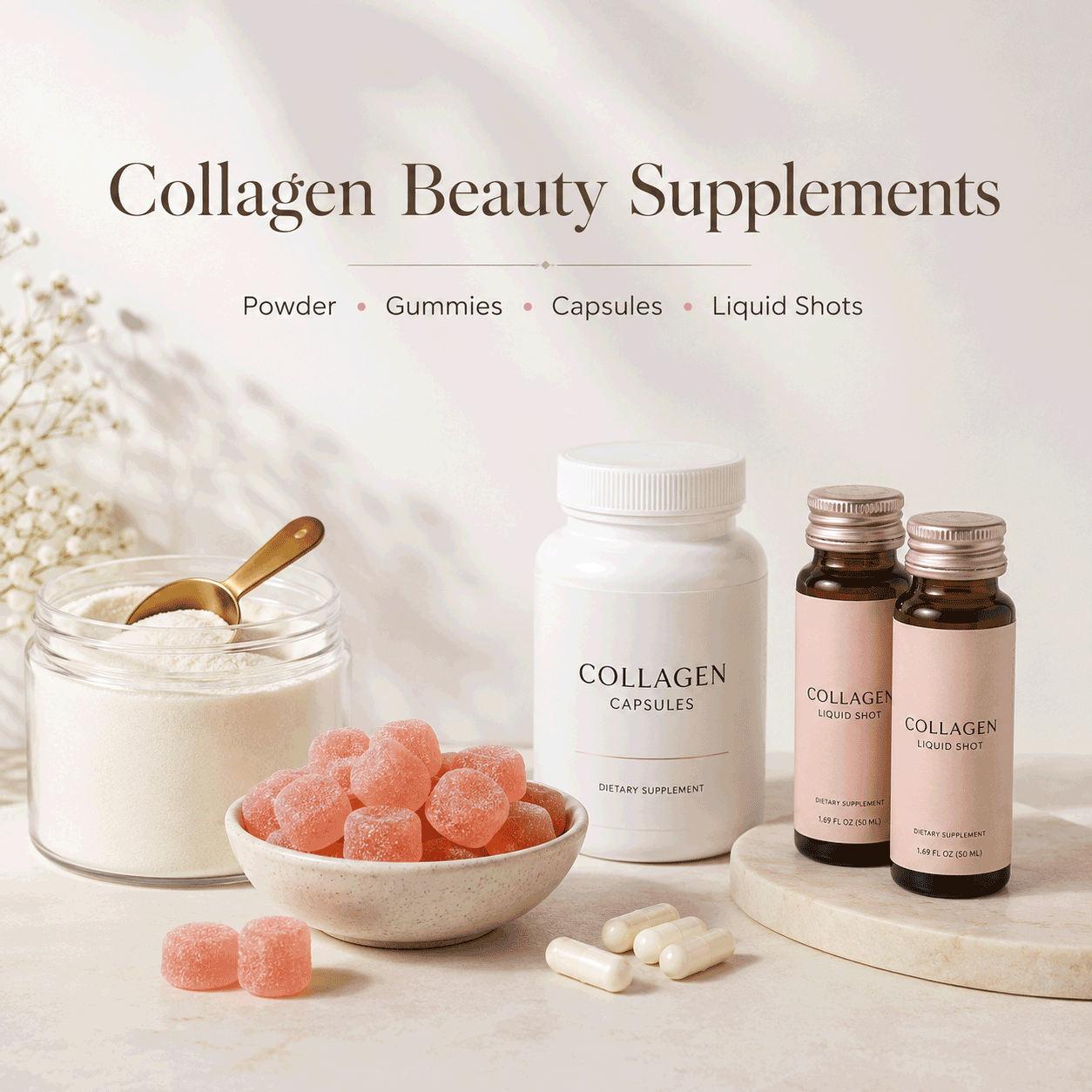
For supplement brands, collagen peptide supplementation offers several product directions. A brand can develop collagen powder for high-dosage daily routines, collagen drinks for premium beauty positioning, gummies for lifestyle and taste-driven consumers, capsules for clean and compact formulas, or liquid collagen shots for convenient on-the-go use. Each format has strengths and limits. The best format is not always the most fashionable one. It is the format that makes dosage, taste, cost, claims strategy, ingredient story, and consumer experience work together.
Oral collagen peptide supplementation has been studied in different contexts, including skin hydration, skin elasticity, dermal collagen network support, joint health, body composition, brittle nails, bone metabolism, and connective tissue health. Some placebo controlled clinical trials and randomized controlled study designs have investigated how specific bioactive collagen peptides may affect skin moisture, collagen synthesis, or markers related to connective tissue. However, brand owners should present collagen carefully. Collagen is a dietary supplement ingredient, not a disease treatment. It can support skin, hair, nails, joints, or bone health positioning, but it should not be marketed as a cure for medical conditions.
This article looks at collagen supplements from a B2B perspective. It compares collagen powder, gummies, capsules, liquid collagen, and collagen drinks not only by consumer preference, but also by formulation feasibility, ingredient compatibility, manufacturing cost, dosage logic, shelf life, taste, packaging, and brand positioning. For beauty-from-within brands, the real question is not only whether collagen works as an ingredient. The more practical question is which format can turn a collagen formula into a product consumers will use consistently.
Collagen Supplement Market: Why Beauty-from-Within Brands Still Focus on Collagen Peptides
Collagen Peptides, Collagen Protein, and Beauty-from-Within Positioning
Collagen peptides are widely used in dietary supplements because they are easier to formulate than native collagen and more suitable for oral supplementation. Hydrolyzed collagen peptides are broken down into smaller peptide chains, making them easier to disperse in powders, beverages, gummies, capsules, and liquid form products. For brand owners, this creates flexibility across multiple dosage forms and price points.
A collagen supplement can be positioned in several ways. The most common beauty-from-within positioning focuses on human skin, skin moisture, skin elasticity, hair skin support, healthy hair, nail growth, and brittle nails. This positioning works well for women’s wellness, active aging, premium beauty, and daily self-care brands. Consumers already understand collagen as a beauty ingredient, so brands do not need to educate from zero. Instead, they need to differentiate through source, format, dosage, flavor, packaging, and complementary active ingredients.
Collagen protein can also be positioned as part of daily wellness. Because collagen is an abundant protein in the human body, it can support a broader story around connective tissue support, joints, bones, and active lifestyles. However, collagen is not a complete protein in the same way as some traditional protein sources because its amino acid profile is different. This means that if a brand wants to position collagen as a protein supplement, it should be careful. A collagen powder can fit into a beauty protein or active aging routine, but it should not overpromise as a complete muscle-building protein.
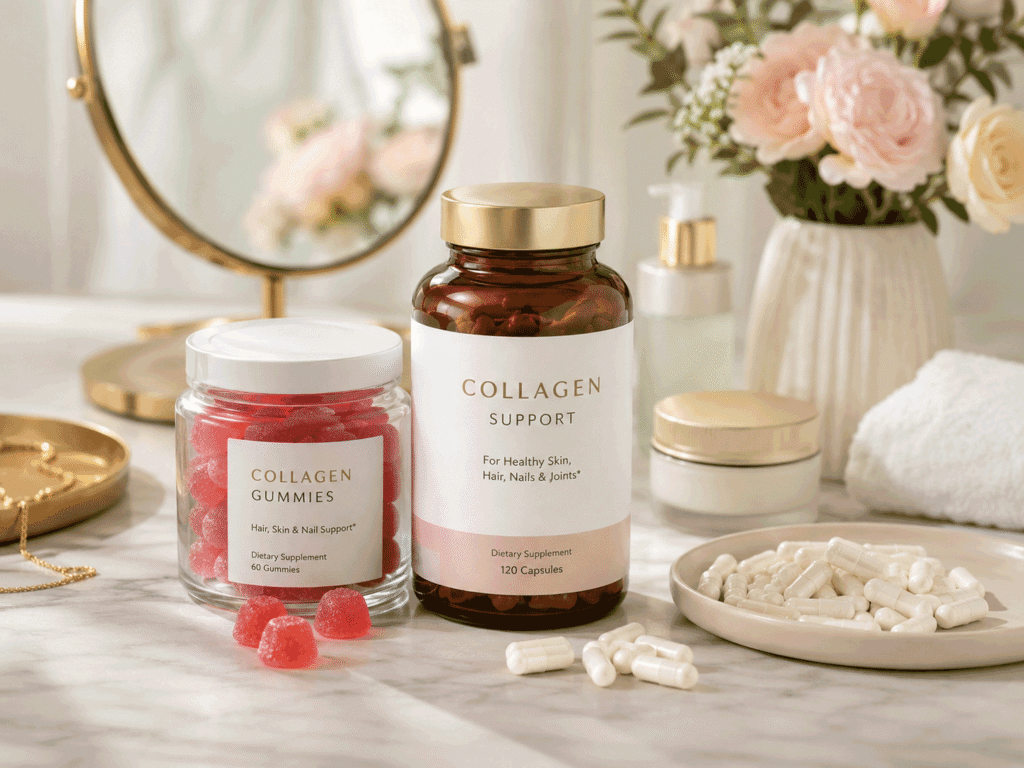
Specific bioactive collagen peptides are another way brands can differentiate. Some suppliers and researchers describe particular peptide profiles as having targeted benefits for skin, joints, or connective tissue. From a formulation perspective, this gives brands a more premium story. Instead of saying only “collagen,” a brand may talk about specific collagen peptides, bovine collagen peptides, marine collagen, collagen type I, or collagen peptides combined with vitamin C, hyaluronic acid, or other bioactive compounds.
Marine collagen is often used for premium beauty positioning. It is commonly sourced from fish skin or fish scales and is usually associated with type I collagen. Many beauty consumers like marine collagen because it feels lighter, more premium, and more closely connected with skin beauty. However, brands must consider allergen labeling, source transparency, taste, odor, cost, and consumer expectations. Fish-derived ingredients may not be suitable for all consumers.
Bovine collagen peptides are often used for broader wellness, joint support, sports nutrition, and collagen protein products. They can support a high-dosage powder format and may be more cost-effective for larger serving sizes. Bovine collagen may fit better for brands targeting bone health, connective tissue support, active aging, and daily protein-style collagen products. However, consumers may care about sourcing, grass-fed positioning, halal or kosher needs, and dietary preferences.
For B2B product development, collagen is valuable because it can be built into many product stories. A young beauty brand may prefer gummies or liquid collagen shots. A premium anti-aging brand may prefer collagen drinks with hyaluronic acid and vitamin C. A sports and wellness brand may prefer collagen powder for hot or cold beverages. A pharmacy-style brand may prefer capsules with collagen peptides combined with other small-dose actives. The same ingredient can serve very different customer groups when the dosage form and formula story are designed properly.
From Skin Beauty to Bone Health: How Brands Can Avoid Over-Narrow Positioning
Many collagen products focus only on beauty benefits, but collagen has a broader role in the human body. It is present in skin, cartilage, bones, tendons, ligaments, gums, and blood vessels. This creates opportunities beyond simple “anti-aging” messaging. Brand owners can develop collagen products for beauty-from-within, skin hair and nail support, joint and cartilage health, connective tissue health, active lifestyle, women’s wellness, and healthy aging.
Skin beauty is still the strongest entry point. Collagen peptide supplementation is often associated with skin moisture, skin elasticity, and the dermal collagen network. Oral collagen is commonly positioned as a way to support skin from within, especially when combined with vitamin C, hyaluronic acid, antioxidants, or other bioactive compounds. Vitamin C is particularly useful in formulation because it is involved in normal collagen formation, which makes it a logical partner for collagen products.
However, brands should avoid positioning collagen too narrowly. A consumer in her 30s may look for glowing skin, nail growth, and healthy hair. A consumer in her 40s or 50s may care about skin aging, joint discomfort, and bone metabolism. An active consumer may be interested in connective tissue support after exercise. Aftercare patients may be interested in general nutritional support around recovery, but brands must be careful with medical claims. Different groups may respond to different collagen stories.
Bone health is another possible direction. Collagen is part of bone structure, and bone metabolism is a relevant concept for aging populations. A collagen supplement for active aging may combine collagen peptides with calcium, vitamin D, vitamin K, magnesium, or other nutrients. However, a brand should not imply that collagen alone solves bone loss or treats osteoporosis. For stronger compliance, brands should focus on structure-support language and pair collagen with nutrients that have clearer authorized or accepted roles in bone health in the target market.
Joint health is also an important positioning direction. Collagen type II is often discussed in relation to cartilage health, while collagen peptides may be used in active lifestyle and joint support formulas. A product aimed at joint discomfort or joint pain relief should be handled carefully because pain relief claims can move into disease or drug-like territory in many markets. For a dietary supplement, safer positioning may focus on joint comfort, mobility, cartilage health, and connective tissue support, depending on local regulations.
Nail growth and brittle nails can also be used as a beauty-from-within angle. Some consumers are highly motivated by visible beauty outcomes such as stronger nails, less breakage, healthier hair, and more hydrated-looking skin. A capsule or gummy format may fit this audience well because it feels easy and habit-forming. A powder may fit consumers who already use beauty drinks, protein powders, or morning wellness routines.
Brands should also consider periodontal inflammation and oral connective tissue only with great care. Collagen is present in gums and connective tissues, but inflammation-related claims can become sensitive. If a brand wants to develop oral health positioning, it should involve regulatory review and avoid implying treatment of gum disease.
The strongest collagen brands usually do not try to claim everything. Instead, they choose a clear angle. A product can be a high-dose collagen powder for daily beauty and active aging. It can be a liquid collagen shot for premium skin hydration positioning. It can be a gummy for hair skin and nail support. It can be a capsule formula with hyaluronic acid, vitamin C, biotin, and zinc. It can be a marine collagen drink for Asian beauty consumers. The best strategy is focused enough to be memorable but broad enough to support repeat purchase.
Collagen Powder vs Liquid Collagen: Which Format Fits Premium Beauty and Daily Wellness?
Collagen Powder for Higher Dosage, Flavor Flexibility, and Daily Routine Products
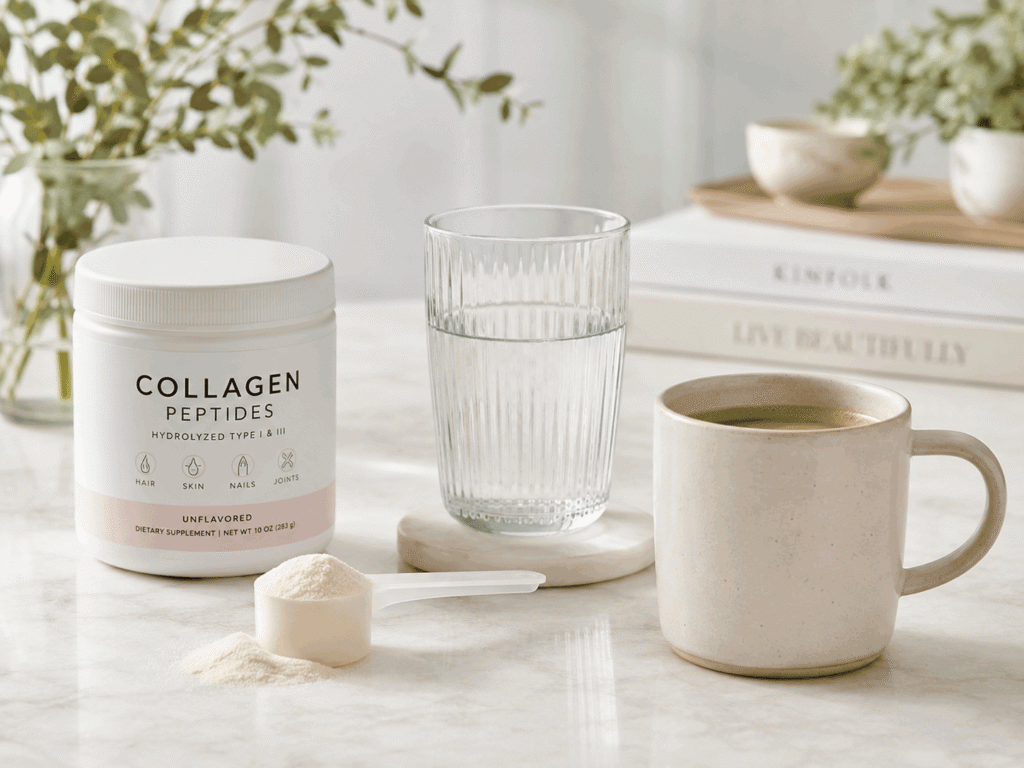
Collagen powder is one of the most practical formats for collagen peptide supplementation because collagen is usually used at gram-level serving sizes. For brands that want to deliver several grams of collagen peptides per day, powder is often more realistic than capsules or gummies. A powder product can be designed with 5 grams, 10 grams, or even higher serving sizes depending on formula, taste, market positioning, and manufacturing cost.
Collagen powder also fits daily routine behavior. Consumers can add it to hot or cold beverages, smoothies, coffee, tea, juice, yogurt, or breakfast recipes. This makes it suitable for morning beauty rituals, active aging routines, protein-style wellness products, and family-size products. If the product dissolves well and tastes pleasant, powder can create strong repeat use.
From a manufacturing perspective, collagen powder offers great flexibility. Brands can create unflavored collagen powder, flavored beauty drink powder, collagen protein blends, collagen coffee creamers, electrolyte collagen powder, or collagen peptides combined with vitamins, minerals, hyaluronic acid, antioxidants, or botanical extracts. It can be packed in jars, tubs, pouches, sachets, or stick packs. For e-commerce and subscription models, powder can also offer a good cost-per-serving structure.
Powder is especially suitable for higher-dose collagen peptides. Capsules have limited fill capacity, and gummies have limits related to texture, sugar, pectin or gelatin system, and serving size. Liquid shots can deliver meaningful collagen amounts, but they are usually more expensive to produce and ship. Powder is often the most efficient format when the brand wants dosage strength and formula flexibility.
However, collagen powder has challenges. Taste and odor are major concerns, especially for marine collagen. Some collagen raw materials may have a fishy, animal, or broth-like note. Flavor masking becomes important. Berry, citrus, peach, mango, lemon, coconut, vanilla, and coffee flavors are often used to improve consumer experience. If the product is unflavored, the collagen source must have a clean sensory profile.
Solubility is another issue. Consumers expect collagen powder to dissolve easily in hot or cold beverages. Some collagen peptides dissolve well in warm liquids but may clump in cold water. Brands should test the powder in the real use scenario. If the product claims it can be used in hot or cold beverages, the formula should perform well in both.
Powder flow and filling performance also matter. Collagen powder can be light, dusty, and hygroscopic depending on source and particle size. It may require proper mixing, sieving, humidity control, and packaging. If collagen peptides are combined with other active ingredients, the formula must achieve even distribution. Small-dose ingredients such as vitamin C, hyaluronic acid, biotin, zinc, selenium, or flavors need proper blending to avoid serving variation.
Packaging has a strong effect on user experience. A large tub can work for value and daily routine positioning. Stick packs or sachets can work for travel, trial packs, and premium beauty. Pouches can reduce packaging weight and support refill concepts. For collagen powder, scoop size, serving size, moisture protection, and shelf life should all be considered.
Collagen powder is a strong choice for brands that want a serious collagen supplement with meaningful dosage, broad flavor flexibility, and clear daily-use positioning. It works well for DTC, e-commerce, sports nutrition, active aging, beauty-from-within, and wellness channels. For B2B buyers, the key is to build a powder formula that tastes good, dissolves well, supports the desired claims strategy, and remains stable through shelf life.
Liquid Collagen and Collagen Drinks for Convenience, Premium Feel, and Fast Consumption
Liquid collagen is attractive because it feels convenient, premium, and easy to consume. A consumer does not need to scoop, stir, shake, or mix. A liquid shot or ready-to-drink format can become a beauty ritual: open, drink, and continue the day. This makes liquid collagen especially suitable for beauty brands, gift sets, Asian markets, premium retail, travel-friendly products, and lifestyle-focused campaigns.
A liquid collagen type product can be designed as a small liquid shot, a drink bottle, an ampoule-style beauty drink, or a ready-to-drink functional beverage. The format creates a strong visual identity and can feel more luxurious than powder or capsules. For consumers who dislike mixing powders, liquid form is easier to understand and easier to use.
Brands often connect liquid collagen with rapid absorption. From a marketing perspective, this phrase is attractive, but it should be used carefully. Absorption depends on the form of collagen peptides, digestion, peptide size, formula matrix, serving size, and other factors. Oral ingestion of collagen peptides leads to amino acids and peptides appearing in human blood after digestion and absorption, but brands should not oversimplify this into guaranteed faster or superior results unless supported by specific evidence for the finished product.
Liquid collagen is also useful for formula combinations. A beauty shot can combine collagen peptides with hyaluronic acid, vitamin C, biotin, zinc, botanical extracts, fruit concentrates, or other bioactive compounds. Collagen drinks may include flavors such as berry, peach, lemon, lychee, pomegranate, or tropical fruit. For premium positioning, brands may use marine collagen, glass bottles, elegant packaging, and a strong beauty-from-within message.
However, liquid collagen has more manufacturing complexity than powder. The formula must remain stable in liquid form. The product must control pH, taste, odor, microbial risk, color change, sediment, viscosity, and packaging compatibility. Some active ingredients may degrade faster in liquid than in dry powder. Vitamin C, flavors, botanical extracts, and color systems may need careful stability evaluation. If the product contains collagen peptides at a meaningful dose, mouthfeel and viscosity must also be tested.
Microbial control is a major issue for liquid supplements. The manufacturer must consider heat treatment, preservatives, water activity, pH, filling conditions, bottle type, closure system, and shelf life. A liquid product may require more robust quality control than a powder product. It may also require heavier packaging, higher shipping cost, and more space in storage.
Taste is another challenge. Liquid collagen must taste good immediately because the consumer drinks it directly. Unlike powder, which may be mixed into coffee, smoothies, or juice, liquid collagen has fewer chances to hide unpleasant notes. Marine collagen can be difficult in liquid form if not properly deodorized and flavored. Brands should invest in flavor development before scaling production.
Cost is also higher. Liquid shots usually require bottles, caps, labels, cartons, filling equipment, microbial control, and more expensive transportation. For premium brands, this may be acceptable because the format supports a higher retail price. For value-focused brands, powder may be more practical.
Liquid collagen is best for brands that want convenience, premium beauty, travel-friendly use, and strong shelf presence. It is especially suitable when the target consumer values ritual, packaging, and easy consumption. For B2B development, the key question is whether the target market will pay for the convenience and whether the formula can remain stable, pleasant, and compliant throughout shelf life.
Collagen Gummies and Capsules: How to Match Format With Consumer Preferences and Dosage Limits
Collagen Gummies for Taste, Lifestyle Branding, and Entry-Level Beauty Consumers
Collagen gummies are popular because they are easy to understand, enjoyable to consume, and visually suitable for social media. For consumers who dislike powders, capsules, or liquid shots, gummies feel like a fun daily beauty habit. They are especially attractive for hair skin and nail support products, younger beauty consumers, women’s wellness lines, and entry-level collagen users.
A collagen gummy can be positioned around beauty benefits, skin hair and nails, nail growth, healthy hair, skin moisture, and daily self-care. It can combine collagen peptides with vitamin C, biotin, zinc, hyaluronic acid, or fruit flavors. The product can be sugar-based, low-sugar, pectin-based, gelatin-based, or vegan-style depending on the formula and target market, though collagen itself is animal-derived and therefore not vegan.
Gummies have strong sensory advantages. They can be fruit-flavored, colorful, chewable, and convenient. They do not require water and can be taken at home, work, or while traveling. This makes them attractive for consumers who are new to dietary supplements. The format lowers the barrier to use and can improve daily compliance.
However, collagen gummies have a major limitation: dosage. Collagen peptides are usually used in gram-level amounts in clinical trials, while gummies have limited capacity. If a brand wants to deliver several grams of collagen per day, the consumer may need to eat many gummies. This can create problems with sugar, calories, texture, cost, and daily serving size. A product with only a small amount of collagen may still be marketable, but the brand should be honest about the positioning and avoid implying the same dosage logic as high-dose powder.
Gummy formulation is also more complex than many brands expect. Collagen peptides can affect texture, moisture, chewiness, flavor, and stability. If the formula includes acids, vitamins, minerals, or other active ingredients, the gummy system must remain stable. Excess minerals may create off-taste or texture issues. Some active ingredients may degrade during heating. Moisture control is important because gummies can become sticky, hard, or unstable during storage.
Collagen gummies may be better when collagen is part of a beauty blend rather than the only hero ingredient. For example, a gummy may use collagen peptides combined with vitamin C and biotin for beauty-from-within positioning. It may also include hyaluronic acid for skin moisture support. This approach makes the product story broader, even if the collagen dose is lower than in powder.
From a manufacturing standpoint, gummies require careful control of cooking, depositing, cooling, demolding, drying, oiling or sanding, packaging, and microbial quality. Shelf life can be affected by water activity, packaging barrier, storage temperature, and ingredient interactions. If a brand wants clean-label gummies, sugar-free gummies, or low-sugar gummies, the technical challenge may increase.
Collagen gummies are best for brands that prioritize consumer enjoyment, lifestyle branding, social media appeal, and entry-level beauty. They are not always the best choice for high-dose collagen peptide supplementation. For B2B buyers, the key is to define the product honestly: is it a serious high-dose collagen product, or is it a beauty gummy with collagen as one of several active ingredients? Both can work, but they require different positioning.
Collagen Capsules for Clean Label, Simple Positioning, and Ingredient Combination
Collagen capsules are a practical format for brands that want a clean, simple, sugar-free, flavor-free product. Capsules are easy to include in a daily supplement routine and are familiar to consumers who already take vitamins, minerals, or other dietary supplements. They are also convenient for pharmacies, practitioner channels, and brands that prefer a more professional wellness image.
The biggest advantage of capsules is simplicity. They avoid the taste challenges of collagen powder and liquid collagen. They avoid the sugar, texture, and heat challenges of gummies. They are compact, easy to package, and suitable for combining collagen peptides with other active ingredients. A capsule product can include collagen peptides combined with vitamin C, hyaluronic acid, biotin, zinc, selenium, ceramides, antioxidants, or botanical extracts.
However, capsules also have the most obvious dosage limitation. Collagen peptides require volume. A single capsule can only hold a limited amount of powder, depending on capsule size, powder density, and formulation. If a brand wants to deliver several grams of collagen, the consumer may need to take many capsules per day. This can reduce convenience and increase cost. Therefore, capsules are usually not ideal for high-dose collagen protein positioning.
Capsules may work best when collagen is used as part of a broader beauty or connective tissue formula. Instead of trying to deliver a large collagen dose, the capsule can focus on a smart combination of smaller-dose ingredients. For example, a capsule can position around hair skin and nails, skin moisture support, antioxidant beauty, active aging, or connective tissue support. In this type of product, collagen is part of the story, not necessarily the entire story.
Capsules are also useful when the target consumer avoids sugar, artificial flavors, or sweetened products. Some consumers prefer capsules because they feel more serious and controlled. A capsule can be taken with other daily supplements and does not require mixing or chewing. For brands selling through pharmacies, professional channels, or older consumer groups, capsules can be a strong format.
The choice of capsule shell also matters. Hard gelatin capsules are common, but some brands may prefer alternative capsule materials depending on target market and dietary preference. Since collagen itself is animal-derived, the total product positioning must be coherent. A brand cannot position the product as vegan if it contains collagen, even if the capsule shell is plant-based.
From a manufacturing perspective, collagen capsule filling requires attention to powder flow, fill weight, capsule size, and uniformity. Collagen peptides may be light or fluffy, which can affect capsule filling efficiency. If other active ingredients are included at small amounts, blending uniformity becomes important. The manufacturer must ensure that each capsule contains the intended distribution of ingredients.
Capsules are best for clean-label, professional, compact, and combination formulas. They are not the strongest format for high-dose daily oral supplementation unless the brand accepts a large serving size. For B2B product planning, the capsule format should be used when convenience, sugar-free positioning, and active ingredient combinations matter more than delivering the highest collagen dose.
How to Build a B2B Collagen Formula: Source, Claims, Packaging, and Brand Strategy
Marine Collagen, Bovine Collagen Peptides, Hyaluronic Acid, and Vitamin C: Choosing the Right Formula Story
A successful collagen supplement needs more than collagen peptides. It needs a clear formula story. The source, dosage form, complementary ingredients, target consumer, and claims strategy must work together. If the product is positioned as premium beauty, marine collagen may be attractive. If the product is positioned as active aging or high-dose daily wellness, bovine collagen peptides may be more practical. If the product focuses on skin moisture, hyaluronic acid can support the beauty story. If it focuses on collagen synthesis, vitamin C is a logical partner.
Marine collagen is often associated with beauty and skin support because it is commonly rich in collagen type I, which is highly relevant to human skin and connective tissue. Fish skin-derived collagen can be used in powders, liquid shots, drinks, capsules, and gummies. The main challenges are taste, odor, allergen labeling, sourcing transparency, and cost. Marine collagen may also appeal more strongly in Asian beauty markets, where beauty drinks and premium skin care supplements are well established.
Bovine collagen peptides are often used in high-dose powders, sports nutrition, active aging, and broader wellness products. They may be positioned around connective tissue support, joint health, bone metabolism, and collagen protein. They can work well in unflavored powders, flavored drink mixes, and functional blends. The main considerations are source quality, consumer preference, dietary restrictions, and brand values.
Hyaluronic acid is a valuable partner in skin-focused formulas because consumers already associate it with hydration and beauty. In a collagen formula, hyaluronic acid can support the skin moisture story. Since it is used at much lower dosages than collagen, it is easy to combine in powders, capsules, gummies, and liquid form products. The brand should confirm stability and compatibility in the chosen dosage form.
Vitamin C is one of the most common and logical additions to collagen products. It is connected with collagen synthesis and normal collagen formation in the body. A formula with collagen peptides combined with vitamin C can make more sense than collagen alone, especially for beauty and connective tissue support positioning. Vitamin C can be used in powders, gummies, capsules, and liquid collagen, but the form and stability should be selected carefully.
Vitamin D may be relevant for bone health formulas, especially when collagen is positioned around active aging or bone metabolism. A product for bone health may combine collagen peptides with calcium, vitamin D, vitamin K, magnesium, or other nutrients. This type of formula requires careful regulatory review because bone health claims vary by market.
Other bioactive compounds may include biotin, zinc, selenium, ceramides, antioxidants, botanical extracts, silica, amino acids, or fruit polyphenols. These ingredients can help create a more complete beauty-from-within formula. However, adding more ingredients is not always better. Complex formulas may increase cost, taste challenges, interactions, stability issues, and label complexity.
Brands should also consider clinical positioning. Some products may refer generally to oral collagen peptide supplementation and beauty benefits. Others may highlight specific bioactive collagen peptides or specific collagen peptides studied in placebo controlled clinical trials. If a brand wants a more evidence-based positioning, it should align the ingredient, dose, and finished product format with the evidence being discussed. It should not imply that all collagen products have identical effects.
Some studies use ex vivo model work, human skin measurements, blood peptide analysis, or clinical trials to explore how collagen peptides may interact with biological systems. For consumer-facing language, however, brands should keep claims simple and compliant. The B2B development team can understand the science in depth, but the final product label must follow the rules of the target market.
The best formula story is clear, credible, and manufacturable. A product may be “marine collagen beauty powder with hyaluronic acid and vitamin C.” It may be “bovine collagen peptides for active aging and connective tissue support.” It may be “liquid collagen shot for daily beauty ritual.” It may be “collagen gummy for hair skin and nails.” The story should match the dose, dosage form, and consumer expectation.
Choose the Right Dosage Form for Consumer Preferences, Manufacturing Cost, and Market Channel
Choosing the right collagen dosage form requires balancing consumer preferences with manufacturing reality. Powder, gummies, capsules, and liquid collagen can all work, but they work for different reasons.
Collagen powder is usually the best choice for high-dose collagen peptide supplementation. It allows gram-level serving sizes, flexible flavors, and combinations with other powder ingredients. It can be used in hot or cold beverages, smoothies, coffee, and daily routines. It is suitable for e-commerce, subscription models, sports nutrition, active aging, and beauty-from-within brands that want a serious collagen dose. The main challenges are taste, solubility, moisture control, scoop accuracy, and packaging.
Liquid collagen is best for convenience, premium image, and fast consumption. It can be positioned as a beauty shot, collagen drink, or ready-to-drink wellness product. It is visually attractive and easy for consumers to use. It may work well in beauty retail, gift sets, Asian markets, and premium wellness channels. The main challenges are formula stability, microbial control, packaging cost, shipping cost, taste, and shelf life.
Collagen gummies are best for lifestyle branding, taste, and entry-level consumers. They are fun, easy, and social-media-friendly. They work well for hair skin and nail support, beauty benefits, and women’s wellness products. However, they usually cannot deliver high collagen doses easily. The main challenges are dosage limit, sugar content, texture, heat processing, stability, and cost per effective serving.
Collagen capsules are best for clean-label, sugar-free, flavor-free, and combination formulas. They are suitable for consumers who prefer traditional dietary supplements. Capsules can combine collagen peptides with vitamin C, hyaluronic acid, biotin, zinc, and other small-dose ingredients. The main limitation is capsule capacity. Capsules are not ideal for high-dose collagen unless the consumer is willing to take many capsules daily.
Market channel also matters. Powder products work well online because they offer strong value per serving and can be sold in tubs or pouches. Liquid collagen works well where packaging and premium experience matter. Gummies work well for impulse purchase, beauty retail, and social content. Capsules work well in pharmacies, practitioner channels, and mature supplement lines.
Manufacturing cost must be considered early. Powder is often cost-efficient for high collagen dosage. Gummies may be more expensive per gram of collagen because of process, texture, and serving size limitations. Liquid shots may have high packaging and logistics costs. Capsules may be efficient for small-dose blends but expensive for high-dose collagen. A brand should calculate cost per serving, not only cost per unit.
Regulatory and claims strategy should also guide the format. A high-dose powder may support a collagen peptides story more clearly. A gummy may need a broader beauty blend story. A capsule may rely more on combined active ingredients. A liquid shot may emphasize daily beauty ritual and convenience. The product label, claims, and marketing should reflect what the format can realistically deliver.
Consumer behavior is the final test. A product only works if consumers use it consistently. Collagen supplementation typically requires daily oral supplementation over time. If the product tastes bad, requires too many capsules, feels too expensive, or is inconvenient, consumers may not continue. The dosage form should make daily use easier, not harder.
For brand owners, the right collagen supplement should match the supplement vision. If the brand wants a premium beauty ritual, liquid collagen may be the strongest format. If the brand wants a high-dose daily routine, collagen powder may be better. If the brand wants a fun entry-level beauty product, gummies may work. If the brand wants a clean and compact formula, capsules can be practical.
Conclusion: The Best Collagen Format Depends on Formula, Dose, Channel, and Brand Positioning
Collagen remains a powerful ingredient for beauty-from-within, active aging, connective tissue support, joint health, and daily wellness products. Collagen peptide supplementation has been studied in relation to skin moisture, dermal collagen network support, brittle nails, joint discomfort, cartilage health, body composition, and bone markers. For brand owners, however, the commercial success of a collagen supplement depends on more than the ingredient itself.
Powder, gummies, capsules, liquid collagen, and collagen drinks each create a different consumer experience. Collagen powder is best for high-dose daily oral supplementation and flexible formulas. Liquid collagen is best for premium convenience and beauty ritual positioning. Collagen gummies are best for taste, lifestyle branding, and entry-level beauty consumers. Collagen capsules are best for clean-label, sugar-free, flavor-free, and compact combination formulas.
The formula story matters just as much as the format. Marine collagen can support premium beauty positioning, while bovine collagen peptides may fit broader wellness and active aging. Hyaluronic acid can strengthen the skin moisture story. Vitamin C can support collagen synthesis positioning. Vitamin D, calcium, and other nutrients may fit bone health formulas. Other bioactive compounds can help create differentiation, but only if they support the product’s positioning and remain feasible in the chosen dosage form.
Brands should also avoid overpromising. Collagen is one of the vital proteins in the human body, but a dietary supplement should not be marketed as a cure for skin aging, joint pain, bone disease, wound healing, or medical conditions. Claims should be supported, compliant, and appropriate for the target market. The strongest collagen brands build trust through a clear formula, realistic benefits, good taste, stable quality, and consistent consumer use.
For B2B product development, the best collagen supplement is not the one with the longest ingredient list or the trendiest format. It is the one where the collagen source, dosage, delivery form, active ingredients, flavor, packaging, cost, and consumer expectation work together. When brand owners choose the format strategically, collagen can become more than a familiar ingredient. It can become a focused, differentiated, and repeatable product line for beauty-from-within and wellness markets.