

18 Aug Creatine Supplements Beyond Sports Nutrition: Powder, Capsules, Gummies and Chews
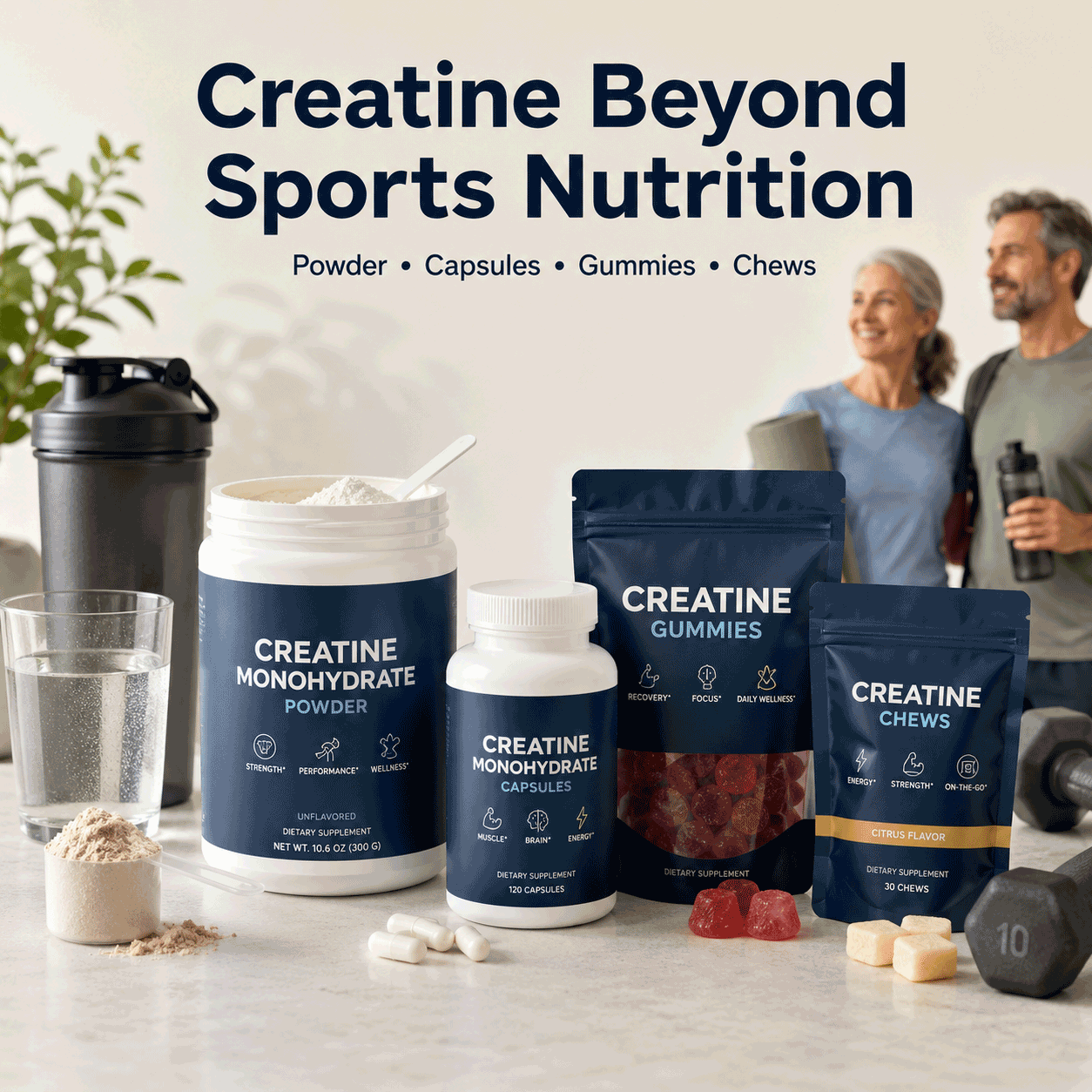
Creatine supplement demand is changing. For many years, creatine was mainly positioned inside sports nutrition, especially for athletes, bodybuilders, and gym users who wanted to build muscle, support muscle strength, improve athletic performance, and enhance recovery after intense exercise. Today, the market conversation is broader. Creatine supplementation is no longer only about muscle growth or training performance. It is also becoming relevant to active lifestyle consumers, women’s strength training, older adults, healthy aging, brain health, cognitive function, and daily energy support.
This shift creates a strong opportunity for dietary supplement brands. Consumers are searching for creatine monohydrate, creatine powder, creatine gummies, capsules, chews, how much creatine to take, benefits of creatine, effects of creatine, and the best creatine format for their lifestyle. At the same time, brands need to be careful. Creatine is a familiar and well-studied ingredient, but every product format has different formulation, dosage, stability, safety, labeling, and quality requirements.
The key question for brands is not simply whether creatine works. The better question is how to create a creatine product that matches the target consumer, delivers enough creatine per serving, maintains quality through shelf life, and communicates benefits responsibly. A creatine supplement can be successful in powder form, capsules, gummies, or chews, but the right format depends on the brand’s market position, product experience, serving size, testing plan, and consumer education strategy.
Why Creatine Supplement Demand Is Moving Beyond Traditional Sports Nutrition
Creatine Monohydrate and the Science Behind Muscle Energy
Creatine is a compound naturally found in the body and stored mainly in muscles. The body can produce creatine from amino acids, and people can also get creatine from food sources such as red meat and fish. In muscle cells, creatine plays an important role in energy production because it helps support the regeneration of adenosine triphosphate, often called ATP. ATP is the immediate energy currency used by the body during short, intense physical activity.
A large part of creatine’s value comes from creatine phosphate. Inside muscle cells, creatine phosphate helps replenish ATP during high-intensity movement, resistance exercise, sprinting, lifting, and repeated bursts of effort. This is one reason creatine supplementation has become so closely linked with athletic performance, muscle strength, exercise capacity, and muscle recovery.
Creatine monohydrate is the most recognized and commonly studied form of creatine. For many brands, creatine monohydrate remains the best starting point for product development because consumers know the name, research supports its use in sports nutrition, and it is practical to formulate in powder. Other forms of creatine exist, but not every form has the same level of research, cost-effectiveness, stability, or consumer recognition.
A sports nutrition position stand from an international society has described creatine monohydrate as one of the most effective ergogenic dietary supplement ingredients for increasing high-intensity exercise capacity and lean body mass during training. This does not mean every creatine product will deliver the same results for every user. Diet, exercise, dosage, consistency, training status, age, health, and product quality all matter. However, the research foundation behind creatine monohydrate is one of the main reasons creatine remains a leading ingredient in the supplement market.
Benefits of Creatine for Muscle Mass, Strength, and Recovery
The most familiar benefits of creatine are connected to muscle mass, muscle strength, athletic performance, and muscle recovery. Creatine helps support higher creatine levels in the muscles, which can help the body produce rapid energy during intense exercise. When taking creatine consistently and combining it with resistance training, many consumers use it to support training output, muscle growth, recovery, and physical activity goals.
For brands, it is important to explain these benefits without exaggeration. Creatine helps support performance in certain exercise contexts, especially high-intensity and repeated-effort activities. It is not a magic product that automatically builds muscle without exercise, protein intake, and a suitable diet. Consumers who want to build muscle still need training, recovery, enough calories, enough protein, and healthy lifestyle habits.
Creatine supplementation may also be useful for consumers who are not traditional bodybuilders. Women interested in strength training, active adults who want to maintain performance, and older adults who want to support muscle function may all be relevant audiences. This is why creatine is moving beyond the old image of a large sports nutrition tub used only by serious gym users.
Brands should also understand consumer concerns. Some people associate creatine use with weight gain, water retention, muscle cramps, muscle injury, or kidney function worries. A responsible article, label, or product page should address these topics calmly. Weight gain during creatine use may sometimes be related to extra fluid stored with creatine in the muscles, especially during the first week or during a loading phase. This is different from fat gain. Concerns about muscle cramps and muscle injury are also common, but brands should avoid making overly broad safety claims and should focus on proper use, hydration, training habits, and healthcare provider guidance when needed.
Older Adults, Brain Health, and New Consumer Groups
The modern creatine market is expanding because consumers are connecting creatine with more than athletic performance. Older adults are becoming an important audience because maintaining muscle mass, strength, mobility, and independence becomes more important with age. Creatine supplementation may fit into healthy aging concepts when combined with protein intake, resistance training, physical activity, and balanced nutrition.
This is a strong product development direction, but it requires careful language. A creatine supplement should not be marketed as a treatment for aging, muscle disease, cognitive decline, or any medical condition. A better positioning is active aging support. Brands can talk about supporting muscle strength, exercise performance, recovery, and active lifestyle routines, especially when creatine use is combined with resistance training.
Brain function is another growing area of consumer interest. Creatine is involved in energy metabolism, and the brain also uses energy constantly. Some research suggests potential benefits of creatine for brain health and cognitive function in certain contexts, but this area is more complex than traditional sports nutrition. Brands should not overstate cognitive benefits or promise mental performance outcomes. It is safer to describe brain health as an emerging research area and to explain that more research is needed before making strong claims.
This broader positioning is why creatine is attractive to both sports nutrition brands and mainstream wellness brands. A brand can create a creatine powder for athletes, a capsule product for active adults, a gummy for lifestyle consumers, or a chew for people who want convenience. The opportunity is real, but the product strategy must match the science, dosage, and format.
Creatine Powder, Capsules, Gummies and Chews: How Brands Should Choose the Right Format
Creatine Powder and the Practical Question of How Much Creatine
When consumers ask how much creatine to take, they often see common discussions around daily servings and loading phase strategies. Some users start taking creatine with a higher dose during the first week, known as a loading phase, and then move to a smaller daily maintenance dose. Other users skip the loading phase and take a consistent daily amount. Brands should be careful not to provide personalized medical advice, but they can explain that product format must match the intended serving size.
Creatine powder is often the most practical format when a brand wants to deliver enough creatine in a simple and cost-effective way. Powder form can accommodate larger serving sizes than capsules, gummies, or chews. It also gives brands flexibility to create unflavored creatine powder, flavored drink mixes, sports nutrition blends, pre-workout formulas, post-workout formulas, hydration combinations, or protein plus creatine products.
Powder is also a strong format for transparency. It is easier to formulate a simple creatine monohydrate product with a clear serving size, such as a scoop that provides a defined amount of creatine. For experienced consumers, this simplicity can be part of the appeal. Many consumers looking for the best creatine are not looking for a complicated formula. They may simply want creatine monohydrate, clear dosage, third party testing, gluten free positioning if relevant, and good mixability.
However, powder is not perfect for every audience. Some customers dislike scooping, mixing, or carrying a tub. Some dislike the taste or texture of certain powders. Others want a product that feels more convenient and lifestyle-friendly. This is why capsules, creatine gummies, and chews are gaining attention. Still, brands should remember that convenience must not compromise quality, efficacy, or label accuracy.
Capsules and the Convenience Trade-Off
Capsules can be a good choice for consumers who want creatine without flavor, sugar, texture, or mixing. A capsule product may appeal to mainstream supplement users who are already familiar with vitamins, minerals, and other supplements in capsule form. Capsules can also work well for travel, simple daily routines, and consumers who do not want a sports nutrition-style powder.
The challenge is dosage. Creatine requires a meaningful serving size, and capsules have limited fill capacity. Depending on the capsule size and creatine amount per capsule, a consumer may need multiple capsules to get enough creatine. If the serving requires too many capsules, customers may not use the product consistently. This can affect consumer satisfaction and repeat purchases.
Capsules also create formulation decisions. A brand may choose pure creatine monohydrate capsules, or it may combine creatine with vitamins, amino acids, magnesium, or other supplements. Combination formulas can look attractive, but they can also create dosage compromises. If too many ingredients are added, there may not be enough creatine in each serving to match consumer expectations. For a creatine supplement, the first question should always be whether the formula delivers an appropriate amount of creatine for the intended positioning.
For brands, capsules may be best suited for lower-dose daily convenience, beginner-friendly creatine use, or wellness positioning. They may be less suitable for consumers who expect a full traditional sports nutrition serving unless the capsule count is clearly communicated and acceptable.
Creatine Gummies and Chews: Taste, Convenience, and Stability Risk
Creatine gummies are one of the most exciting but also most challenging creatine product formats. They are popular because they are easy to take, enjoyable, portable, and more approachable than powder. Gummies and chews can help brands reach consumers who do not identify with traditional sports nutrition. They may appeal to women, beginners, older adults, busy professionals, and lifestyle consumers who want a product that feels simple and great tasting.
However, creatine gummies are not just creatine powder placed into a candy-like format. This is where many brands underestimate the technical challenge. Creatine can be affected by moisture, heat, acidity, processing temperature, water activity, and storage conditions. These factors may affect creatine stability and may lead to degradation over time. If the product does not maintain the labeled creatine content through shelf life, the brand may face consumer trust issues, compliance concerns, returns, negative reviews, or marketplace problems.
This is why creatine gummies require stronger development discipline. A brand should ask whether the manufacturer can test the finished product, confirm creatine levels, evaluate stability, validate shelf life, and control batch-to-batch consistency. A great tasting gummy is not enough. The product must also meet label claims.
Chews may offer another option because they can be positioned between gummies and tablets. They may allow a different texture, water activity, and active loading strategy. However, chews still require careful testing. Brands should not assume that a chew automatically solves all creatine stability concerns. The formula system, manufacturing process, packaging, storage, and testing plan still matter.
Why Other Forms and Combination Products Need Clear Positioning
Other forms of creatine may appear in the market, and some brands may use them to create differentiation. However, consumer recognition and scientific support are not always equal across forms. Creatine monohydrate remains the most established option for many product strategies. If a brand chooses another form, it should be prepared to explain why that form was selected and what evidence supports the decision.
Combination products are also common. Creatine may be blended with protein, amino acids, electrolytes, vitamins, magnesium, caffeine, or other sports nutrition ingredients. These formulas can be useful if the product has a clear purpose, such as recovery, training support, hydration, or active aging. But adding more ingredients does not automatically make the product better.
A common mistake is building a formula that includes too many ingredients at low doses. In this case, the product may look impressive on the label but fail to provide enough creatine or enough of any other ingredient to support the intended benefits. A better approach is to decide the product’s main purpose first. If the main purpose is creatine supplementation, creatine should not become a minor ingredient hidden inside a crowded blend.
Brands should also be careful with weight loss positioning. Creatine is not a weight loss supplement. Some consumers may use creatine during a body composition or fitness plan, but the product should not promise fat loss. In fact, some users may see weight gain from water retention, especially early in use. This should be explained as part of responsible education.
Quality, Safety and Testing: What Brands Should Know Before Launching a Creatine Supplement
Third Party Testing, Label Claims, and Product Quality
Quality is essential in the creatine category. Consumers often compare products based on price, serving size, purity, taste, and testing. For brands, third party testing can help build trust, especially in a market where customers are increasingly concerned about supplement quality and label accuracy.
A creatine supplement should be tested to confirm identity, purity, and creatine content. For creatine powder, this may be more straightforward than for gummies or chews, but testing still matters. For creatine gummies, testing is especially important because the finished product must maintain creatine levels over time. Brands should consider raw material testing, finished product testing, stability testing, shelf-life validation, microbiological testing where appropriate, and packaging compatibility.
Label claims should be realistic and verifiable. If the label says the product contains a certain amount of creatine per serving, the brand should have evidence that the product meets that claim through its shelf life. This is particularly important for creatine gummies because degradation or formulation instability could reduce the actual amount of creatine available to the consumer.
Brands should also consider gluten free claims, allergen statements, vegan claims, sugar content, artificial colors, and other label elements depending on the product format. Every claim should be supported. For example, a gluten free claim requires appropriate controls and testing. A quality product is not only about the active ingredient. It is also about the full label, the manufacturing process, the packaging, and the finished consumer experience.
Safety, Kidney Function, and Healthcare Provider Guidance
Creatine is generally considered well tolerated for healthy adults when used appropriately, but safety communication still matters. Consumers often ask whether taking creatine affects kidney function, causes muscle cramps, leads to muscle injury, creates negative effects, or causes too much weight gain. Brands should address these concerns responsibly.
Research in healthy individuals has not shown that recommended creatine supplementation harms kidney function, but this does not mean every consumer should use creatine without caution. People with kidney disease, reduced kidney function, or other health conditions should speak with a healthcare provider before starting creatine. Pregnant or breastfeeding consumers, people taking other medications, and people using multiple other supplements should also get professional guidance.
Brands should avoid saying that creatine is risk-free. A more responsible message is that creatine is widely used and generally well tolerated in healthy adults when taken as directed, but individual needs and health conditions vary. The product label should include clear directions for use, serving size, warnings, storage instructions, and age guidance.
Negative effects may include digestive discomfort for some users, especially with a higher dose or loading phase. Some people may experience water retention or a small increase in body weight due to extra fluid in muscles. This is one reason consumers should understand the difference between water retention and unwanted fat gain. If a consumer experiences unusual symptoms, has kidney concerns, or feels unwell, they should stop taking creatine and consult a healthcare provider.
How Creatine Use Should Be Communicated to Consumers
Good consumer education can improve trust and reduce confusion. Brands should explain how creatine works in simple language. Creatine helps support the body’s rapid energy system by contributing to creatine phosphate stores in muscle cells, which help regenerate adenosine triphosphate during high-intensity physical activity. This is the foundation behind many benefits of creatine for exercise, muscle strength, athletic performance, and recovery.
At the same time, brands should explain that creatine use works best with consistent intake, exercise, protein, hydration, and recovery. A consumer should not expect the same results from a creatine supplement if they do not train, eat enough protein, or maintain healthy habits. Creatine is a tool, not a replacement for lifestyle.
Brands should also clarify that creatine is not only for men or bodybuilders. Women, older adults, recreational exercisers, and active lifestyle consumers may all be interested in creatine supplementation. However, the product message should be tailored to each audience. A product for serious sports nutrition users may focus on performance, muscle strength, and recovery. A product for older adults may focus on active aging, muscle support, and ease of use. A product for mainstream consumers may focus on convenient daily creatine in capsules, gummies, or chews.
Choosing the Best Creatine Strategy for Brand Success
The best creatine product is not the same for every brand. A sports nutrition brand may choose a pure creatine monohydrate powder because it is direct, cost-effective, and easy to dose. A wellness brand may choose capsules because they feel familiar and simple. A lifestyle brand may choose creatine gummies or chews because they are enjoyable and easy to take. A performance brand may create a formula with creatine, amino acids, electrolytes, and protein to support exercise and recovery.
The best creatine strategy depends on the target customer, serving size, dosage form, flavor expectations, price point, testing plan, manufacturing capability, and brand promise. If a brand wants to deliver a higher dose, powder form may be the most practical. If a brand wants convenience, capsules may work well. If a brand wants a taste-forward product, gummies and chews may be attractive, but only with strong stability and third party testing.
Brands should also think about long-term trust. Creatine is a competitive category. Consumers can quickly compare labels, prices, reviews, and testing claims. A product that tastes good but fails to deliver the labeled amount of creatine may damage the brand. A product that uses aggressive claims may create compliance risk. A product that ignores safety warnings may lose credibility with both customers and retailers.
A stronger strategy is to create a product that is clear, honest, and well tested. The label should state how much creatine is included. The formula should match the product promise. The dosage form should match the intended use. The marketing should explain potential benefits without making medical claims. The brand should encourage consumers with health conditions to speak with a healthcare provider before use.
Conclusion: Creatine Is Growing, But Quality and Format Matter
Creatine supplement demand is expanding beyond traditional sports nutrition. Creatine monohydrate remains a trusted foundation for many products, especially creatine powder, but capsules, creatine gummies, and chews are helping brands reach new customers. The category now includes not only athletes and gym users, but also women, older adults, active lifestyle consumers, and people interested in muscle mass, muscle strength, recovery, brain health, energy, and healthy aging.
The benefits of creatine are best understood in context. Creatine helps support rapid energy production in muscle cells through creatine phosphate and adenosine triphosphate systems. Studies suggest that creatine supplementation can support athletic performance, muscle growth, muscle recovery, and training adaptations when combined with exercise. There is also growing interest in cognitive function and brain health, although brands should be careful because more research is needed before making strong claims in these areas.
For brands, the biggest product development question is format. Powder is practical for delivering enough creatine and remains a strong choice for serious users. Capsules offer convenience but may require multiple capsules per serving. Creatine gummies and chews are attractive and consumer-friendly, but they require careful formulation, stability testing, and label claim verification. Other forms and combination products can create differentiation, but they need clear evidence and positioning.
Safety and quality should remain the foundation. Brands should address kidney function concerns responsibly, include healthcare provider guidance for people with kidney disease or other health conditions, explain possible water retention or digestive discomfort, and avoid exaggerated claims. Third party testing, accurate labeling, shelf-life validation, and clear directions for use can help build consumer trust.
Creatine is no longer only a gym supplement. It is becoming a broader dietary supplement ingredient for strength, active living, recovery, and healthy aging. Brands that understand the science, respect the limits, choose the right format, and invest in quality will be better positioned to create creatine products that consumers trust and use consistently.